
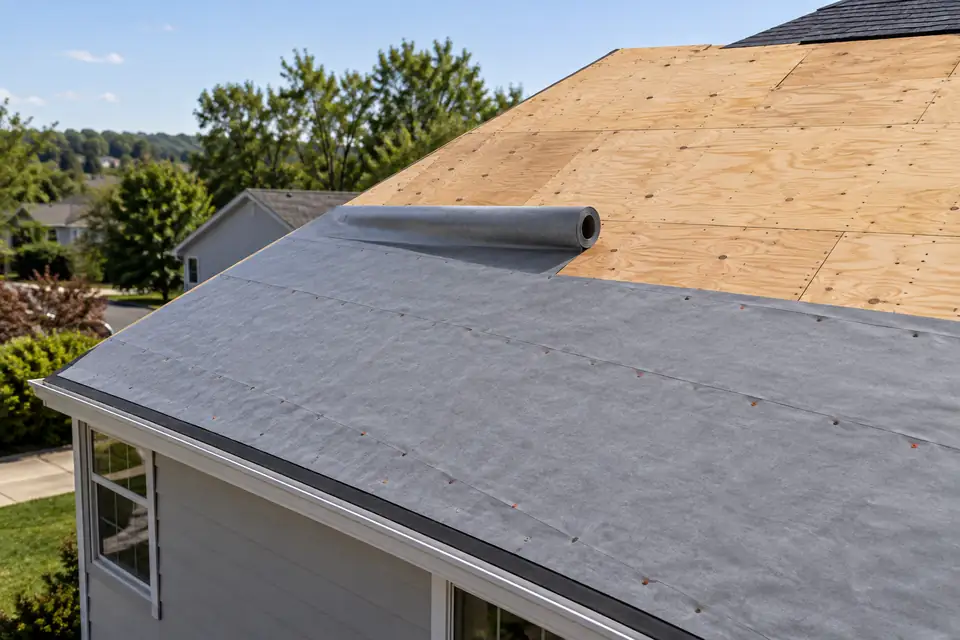
The roof deck is the layer of wood panels or boards nailed to your rafters or trusses, and the underlayment is the sheet laid over it before the shingles go on. HomeGuide puts the cost of replacing decking at $2 to $5 per square foot installed, and a sheet of plywood or OSB at $9 to $64 for the material alone. Underlayment is usually priced into a roof replacement; on its own, HomeGuide gives $0.75 to $4.00 per square foot installed and Fixr $800 to $1,200 for a typical roof. Only the deck can be judged once the old roof is off, so it is the line on an estimate most likely to change.
What sits under your shingles
A shingle roof is a stack of layers, and each one has a job. The Asphalt Roofing Manufacturers Association (ARMA) describes the shingles as the main surface that sheds water and the underlayment as a second barrier between the shingles and the wood.
| Layer, from the top down | What it does |
|---|---|
| Shingles | Shed most of the water and give the roof its look |
| Ice barrier, at eaves, valleys and around chimneys | A self-adhering sheet that seals around nails where water is most likely to back up |
| Underlayment, over the rest of the deck | A second water barrier if water gets past the shingles |
| Deck, also called sheathing | The flat wood surface the roof is nailed to; it carries the load to the rafters or trusses |
| Rafters or trusses | The framing; not usually part of a roof replacement |
ARMA says shingles should never be installed directly on a wood deck: the underlayment goes on first. It also lists what underlayment does besides keeping water out. It keeps the deck dry until the shingles are on, it is a required part of a fire-rated roof assembly, and it keeps the outline of the deck panels from showing through the shingles.
The deck: plywood, OSB or boards
Most houses have one of three kinds of deck.
- Plywood. APA, the Engineered Wood Association, describes plywood as thin layers of wood veneer glued in alternating directions and pressed under heat. Roof plywood is often sold as CDX. APA notes that these "Exposure 1" panels can stand the moisture of normal construction but are not made to be left out in the weather for good.
- OSB (oriented strand board). APA describes OSB as thin strands of wood laid in cross-oriented layers and bonded with moisture-resistant adhesive. It lists roof sheathing among OSB's common uses, and says standard panels are 4 by 8 feet.
- Boards, or plank decking. Older houses may have boards laid across the rafters. Fixr says plank decks are rarely built now and are mostly found on older roofs.
Fixr and HomeGuide both put plywood above OSB in price. Fixr calls plywood the stronger and more water-resistant of the two, and says OSB is one of the most popular choices because it costs less. Both carry APA span ratings, and both are accepted by the shingle makers' instructions. What matters on your roof is that the panels are the right thickness for the spacing of the framing, and that they are installed correctly.
How thick the deck should be
Each APA-rated sheathing panel is stamped with a span rating such as 32/16. APA explains that the first number is the widest spacing of supports, in inches, the panel is rated to span as roof sheathing. The thickness a roof needs depends on that spacing and on your local building code.
The shingle maker's instructions set a minimum too. Owens Corning's installation instructions for its Duration shingles call for a deck of at least 3/8-inch plywood, 7/16-inch OSB or boards at least 6 inches wide, installed to APA's guidance and local code, and kept dry before, during and after the job.
Thicker is common in practice. Today's Homeowner says 5/8 inch is the most commonly recommended thickness for roof sheathing, that 1/2-inch plywood is often enough, and that 3/8 inch suits only specific cases. HomeGuide notes that some building codes require 5/8-inch decking. Ask your roofer what thickness your local code calls for, and make sure the estimate names it.
The panels also need a small gap between them. Owens Corning's instructions call for sheathing panels spaced at least 1/8 inch and at most 1/4 inch apart, and APA publishes builder guidance on 1/8-inch spacing to keep panels from buckling as they swell with moisture.
When the deck is replaced, and what it costs
A deck is not replaced by default. HomeGuide says decking is replaced when it has dry rot, sagging or extensive water damage, and that roofers may leave sound decking in place. It gives a typical life of 20 to 40 years for decking, depending on climate, insulation and roof type. Signs it lists include spongy or flaking wood, repeated leaks, stains or mold on the attic side, and a sagging roof line. Most of that damage is seen only once the old shingles and underlayment come off, which is why the deck is priced as an allowance.
Two cost sources give different figures, and neither is recent.
| Source | Decking material | Labor | Total |
|---|---|---|---|
| HomeGuide, April 5, 2023 | Plywood $16 to $64 a sheet; OSB $9 to $60 a sheet; tongue and groove $48 to $83 a sheet | $1.50 to $3.00 per square foot | $2 to $5 per square foot; $2,400 to $8,600 average total |
| Fixr, published January 24, 2023 | $2.27 to $4.13 per square foot, OSB at the lower end, plywood at the higher | $0.89 to $1.62 per square foot | Worked example: $3,160 to $5,749 for 1,000 square feet |
HomeGuide's range is for the whole deck; it gives a national average of $5,500, with reported jobs from $900 to $12,800. Where only part of the deck is damaged, only those sheets need replacing, such as around a leaky chimney or along a rotted eave.
That is why roofers price extra decking per sheet. A standard sheet is 4 by 8 feet, or 32 square feet. At HomeGuide's $2 to $5 per square foot installed, one sheet works out to roughly $64 to $160 installed. That figure is our own arithmetic, not a price either source publishes. Use it to judge whether a per-sheet price on your estimate is in the usual range.
Underlayment: felt or synthetic
ARMA's bulletin on steep-slope underlayment describes the main kinds and the standards they are made to.
| Type | Standard | What it is | Material cost per square foot (Fixr) |
|---|---|---|---|
| Asphalt-saturated felt, "No. 15" or "No. 30" | ASTM D226 Type I or Type II; ASTM D4869 | Organic felt soaked in asphalt; water-resistant, not waterproof | $0.05 to $0.50 |
| Synthetic | ASTM D8257 | Laminated plastic sheet, nailed down | $0.17 to $0.55 |
| Self-adhering (rubberized asphalt) | ASTM D1970 | A sticky polymer-modified asphalt membrane | $0.55 to $0.65 |
ARMA says the D226 types differ mainly by weight: Type I is the lighter No. 15 felt and Type II the heavier No. 30. It also notes that synthetic underlayment is lighter than felt yet covers more roof per roll. Fixr puts it at 2 or 3 rolls of synthetic for a 2,000-square-foot roof, against about 14 rolls of felt.
The practical differences:
- Exposure. HomeGuide says asphalt felt can tear or wrinkle if it is left exposed for more than a few hours, while synthetic or rubberized underlayment can stay exposed for several weeks.
- Life. HomeGuide gives 20 to 30 years for felt and 25 to 30 years for synthetic or rubberized underlayment.
- What the shingle maker asks for. Owens Corning's Duration instructions call for synthetic underlayment meeting ASTM D8257 on roofs of 4 in 12 or steeper.
On lower slopes the rules change. ARMA says building codes call for two layers of mechanically fastened underlayment, or one layer of self-adhering underlayment, on slopes from 2 in 12 up to 4 in 12. Owens Corning's instructions say the same, with each of the two layers overlapping at least half the one below plus 2 inches.
For cost per square, tear strength, exposure times and what shingle warranties require, see felt vs synthetic underlayment.
Ice barrier, or ice-and-water shield
An ice barrier is a self-adhering membrane laid on the bare deck at the eaves before the shingles go on. ARMA explains that its asphalt seals around the shanks of the shingle nails, so water forced back under the shingles by an ice dam is unlikely to get through, even with nails through it. Fixr puts the material at $0.75 to $0.90 per square foot.
ARMA's bulletin on ice dams says the International Residential Code and International Building Code require an ice barrier in areas with a history of ice forming along the eaves and backing up water. ARMA recommends running it at least 24 inches inside the wall line of the house. Owens Corning's instructions call for the same 24 inches, measured horizontally, and note that most roofs need two courses of the membrane to reach that far. Some local codes ask for more and some for less, so check your local code.
Ice barrier also goes where water concentrates: ARMA lists valleys, ridges, hips and the areas around chimneys, skylights and vent pipes. Two things are worth asking about:
- Full coverage. ARMA notes that some roofers apply self-adhering membrane over the whole deck on low slopes or where high winds are common. Because it blocks vapor, ARMA says attic ventilation, a vapor retarder on the warm side and full insulation become more important, to keep condensation from forming under the deck. Our guide to roof ventilation explains the rest.
- The old membrane. ARMA recommends removing old self-adhering underlayment during a reroof whenever it can come off without damaging the deck, so the deck can be inspected. Where it cannot, a second layer over one existing layer may be allowed by the maker's instructions and the local code.
An ice barrier stops a leak, not the dam itself. Our guide to ice dams covers the attic side of the problem.
A sealed roof deck
In storm-prone areas you may see a "sealed roof deck" on an estimate. It comes from FORTIFIED Roof, a voluntary standard from the Insurance Institute for Business & Home Safety (IBHS). The seams between deck panels are taped or covered, so that if wind strips the shingles, rain cannot pour through the joints. IBHS says sealing the seams can cut water getting in by up to 95%, and that fastening the deck with ring-shank nails in a closer pattern nearly doubles the uplift a roof can withstand. If you are weighing a FORTIFIED roof, ask your insurer whether it affects your policy. This guide is not insurance advice.
How the deck and underlayment show up on your estimate
Look for each of these as a named line, not folded into a single price:
- Tear-off to the deck, with every existing layer removed. A layover leaves the deck hidden; our guide to putting new shingles over old ones explains the tradeoff.
- Deck replacement priced per sheet, with the material (plywood or OSB) and thickness named, and whether any sheets are already included in the total.
- A promise to show you the damage, by photos or on site, before extra sheets are added to the bill.
- Underlayment by product name and type, felt or synthetic, and whether it is the shingle maker's own product. Some system warranties require the maker's own components; our guide to roof warranties explains how those work.
- Ice barrier by location and extent: at the eaves, how far up the roof, and in the valleys and around chimneys and skylights.
- Two layers or self-adhering underlayment on any slope under 4 in 12.
When you compare estimates, differences in these lines explain a lot of the difference in price. Our guide to questions to ask a roofer covers the rest of the contract.
Frequently asked questions
Is plywood better than OSB for a roof deck?
Both are accepted for roof sheathing by APA and by the shingle makers' instructions. Plywood usually costs more; Fixr calls it stronger and more water-resistant, and OSB is widely used because it costs less. The thickness and span rating matter more than the choice between them.
Will my whole deck need replacing?
Not necessarily. HomeGuide says decking is replaced when it is rotted, sagging or badly water-damaged, and that sound decking can stay. Because no one knows how many sheets are bad until the old roof is off, estimates price them per sheet.
Is synthetic underlayment worth it over felt?
It costs somewhat more per square foot but covers more roof per roll, and it can stay exposed longer during the job. Some shingle makers' instructions, including Owens Corning's for its Duration line, call for synthetic underlayment meeting ASTM D8257.
Do I need ice-and-water shield?
Where your local code requires it, yes: model codes call for an ice barrier at the eaves where ice dams have backed up water. ARMA also describes it as extra protection in valleys, on hips and ridges and around chimneys, skylights and vent pipes. Check what your local code requires.
Does insurance pay for new decking?
Homeowners insurance may cover decking damaged by a covered event such as a storm. HomeGuide notes that some policies do not pay for code upgrades, such as replacing thinner decking with the thicker decking a current code requires. Your policy decides; this guide is not insurance advice.
How we got these numbers
HomeAnvil does not yet publish price data of its own. Every figure and fact on this page comes from a published source, each read on September 26, 2026:
- HomeGuide, cost to replace roof decking and plywood sheathing, April 5, 2023: installed cost per square foot, total range and national average, price per sheet by material, labor, lifespan, signs of rot and the note on code upgrades.
- HomeGuide, roof underlayment replacement cost, April 18, 2024: installed underlayment cost, lifespan and exposure times.
- Fixr, all about roof decking, published January 24, 2023: plank, plywood and OSB decks, and material and labor costs per square foot.
- Fixr, roof underlayment replacement cost, updated January 31, 2025: total cost, material cost by type, rolls per roof and ice barrier cost.
- Asphalt Roofing Manufacturers Association, Steep Slope Roofing Underlayment, May 6, 2025; Protecting Against Damage from Ice Dams, August 27, 2024; Use of Self-Adhering Membranes as Underlayments in Steep Slope Roofing, April 23, 2024; Self-Adhering Underlayment Removal Prior to Steep Slope Re-Roofing, April 23, 2021; and Asphalt Roofing Systems Components.
- Owens Corning, TruDefinition Duration shingles installation instructions, January 2026: deck minimums and spacing, underlayment by slope and ice barrier extent.
- APA, the Engineered Wood Association, plywood and OSB: how each panel is made, span ratings, exposure classes, panel size and spacing.
- Today's Homeowner, roof sheathing thickness, updated April 11, 2025: commonly recommended thicknesses.
- Insurance Institute for Business & Home Safety, FORTIFIED Roof: sealed roof decks and ring-shank nailing.
- The per-sheet installed figure is our own arithmetic from HomeGuide's per-square-foot range and a 32-square-foot sheet.
The two cost sources are from 2023 and 2025 and have not been updated since. We will update this page when newer national figures are published, and the date above will say when.
Related guides
 How much does a roof replacement cost?A roof replacement typically costs $5,900 to $13,400, or $400 to $1,100 per square installed. How to measure your roof, what moves the price and how to compare estimates.
 What happens during a roof replacement, step by step?An asphalt shingle roof usually goes on in one to three days. What happens before, during and after, from tear-off and deck repair to flashing and cleanup.
 What questions should you ask a roofer before you sign?The roofing questions to ask before you sign: tear-off, decking, ice barrier, ventilation, permit, crew, cleanup, payment and warranty papers, plus red flags.
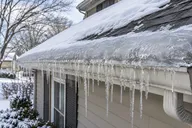 What causes ice dams, and how do you stop them?Ice dams form when attic heat melts roof snow that refreezes at the eaves. How to remove one safely, what not to do, and how to stop them coming back.
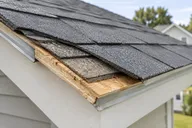 Can you put new shingles over old ones?Often yes, once: the building code bars a layover on a roof with two or more layers. What a roof-over saves, what it adds in weight, and what it hides.
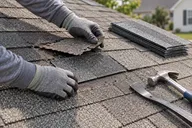 How much does a roof repair cost?Most roof repairs cost $395 to $1,967, about $1,173 on average. Prices by problem: shingles, flashing, leaks, decking, vents, fascia and sagging.