
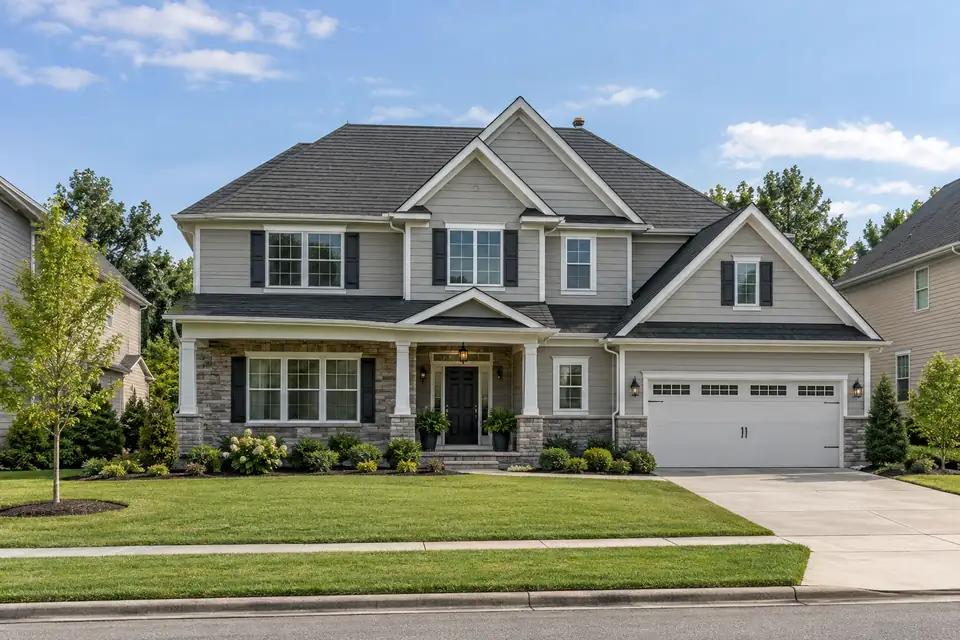
Most roof replacements in the United States cost $5,900 to $13,400, with a reported average of $9,609, according to HomeAdvisor's survey of its customers. A standard, fully specified asphalt shingle job priced for the 2025 Cost vs Value report comes to $31,871, and the same job in metal to $51,865. Your own price depends mostly on the size and steepness of your roof, what has to come off it, and the material you choose.
Two national figures, and why they differ
| Source | What it measures | Asphalt shingles | Metal |
|---|---|---|---|
| HomeAdvisor, updated June 17, 2026 | What more than 30,000 of its customers reported paying, all roof types | $9,609 average; typical $5,902 to $13,376 | not given as one total |
| Cost vs Value 2025, published September 18, 2025 | One standard 30-square (3,000 square foot) roof, the same specification everywhere, priced with a professional estimating database | $31,871 | $51,865 |
The two are not in conflict. A customer survey averages real jobs of every size, many of them smaller and simpler than a standard specification. Cost vs Value prices one complete, well-specified project so that it can compare projects with each other and with what they add at resale. Treat the survey as a guide to a typical bill and the Cost vs Value figure as the price of a thorough job on a good-sized roof.
HomeAdvisor also gives a price per square foot of roof: $4 to $11, about $7 on average. Roofers price by the square, which is 100 square feet of roof surface, so that range works out to $400 to $1,100 per square.
Price your own roof by the square
Estimates are easiest to compare per square, because every roofer is pricing the same surface. You can estimate that surface yourself before anyone climbs a ladder.
- Measure the footprint the roof covers, including the overhangs past the walls. For a simple rectangle, multiply its length by its width.
- Find the pitch, the rise in inches for every 12 inches across. A roofer's quote, your home's plans or a pitch gauge app will tell you.
- Multiply the footprint by the pitch factor below. A sloped roof has more surface than the ground it covers.
- Divide by 100 to get squares.
| Pitch | Multiply the footprint by |
|---|---|
| 3 in 12 | 1.031 |
| 4 in 12 | 1.054 |
| 5 in 12 | 1.083 |
| 6 in 12 | 1.118 |
| 7 in 12 | 1.158 |
| 8 in 12 | 1.202 |
| 9 in 12 | 1.250 |
| 10 in 12 | 1.302 |
| 12 in 12 | 1.414 |
The factor is the geometry of a slope: the square root of one plus the pitch squared. It assumes every plane of the roof has the same pitch; dormers, valleys and several pitches on one house add surface, and a roofer's measurement will be the better number.
An example. A footprint of 1,700 square feet with a 6 in 12 pitch has about 1,700 × 1.118 = 1,901 square feet of roof, or about 19 squares. When estimates arrive, divide each total by the squares it covers and compare the prices per square side by side. Roofers also order extra material for the cuts at edges, hips and valleys, so ask how much each estimate allows for waste; an estimate that allows far more or far less than the others deserves a question.
To skip the arithmetic, the roof cost calculator does it for you and prices the result for eight roofing materials.
How roofing labor costs differ by state
Labor is a large part of a roof's price, and what roofers earn varies widely from state to state. Across the United States, the median roofer earned $26.65 an hour in May 2025, according to the Bureau of Labor Statistics. In the states at the top of the table below, roofers earn a third or more above that; at the bottom, about a fifth below.
This is a wage, not a price for a job: your estimate also carries materials, tear-off, disposal, permits, insurance and the contractor's overhead. But where roofers earn more, labor-heavy work such as tear-off and steep or complex roofs usually costs more too.
| State | Median hourly wage, roofers | Compared with the national median | Roofers employed |
|---|---|---|---|
| Illinois | $37.45 | +41% | 5,300 |
| New Jersey | $36.83 | +38% | 1,860 |
| Minnesota | $35.81 | +34% | 1,890 |
| Massachusetts | $34.98 | +31% | 1,950 |
| Alaska | $32.09 | +20% | 310 |
| New York | $31.74 | +19% | 4,570 |
| California | $30.58 | +15% | 21,190 |
| Connecticut | $29.84 | +12% | 790 |
| District of Columbia | $29.69 | +11% | 100 |
| Rhode Island | $29.63 | +11% | 360 |
| Washington | $29.16 | +9% | 5,890 |
| Maryland | $28.89 | +8% | 2,050 |
| New Hampshire | $28.76 | +8% | 270 |
| North Dakota | $28.72 | +8% | 290 |
| Hawaii | $28.64 | +7% | 1,110 |
| Michigan | $28.62 | +7% | 3,090 |
| Delaware | $28.58 | +7% | 230 |
| Wisconsin | $28.54 | +7% | 2,400 |
| Vermont | $28.39 | +7% | 210 |
| Montana | $28.38 | +6% | 370 |
| Oregon | $28.35 | +6% | 3,430 |
| Indiana | $27.88 | +5% | 2,980 |
| Idaho | $27.78 | +4% | 1,190 |
| Pennsylvania | $26.79 | +1% | 3,830 |
| Colorado | $24.88 | -7% | 3,340 |
| West Virginia | $24.60 | -8% | 440 |
| Nevada | $24.56 | -8% | 2,120 |
| Maine | $24.10 | -10% | 610 |
| Ohio | $23.74 | -11% | 4,610 |
| North Carolina | $23.56 | -12% | 3,060 |
| Louisiana | $23.44 | -12% | 760 |
| Utah | $23.40 | -12% | 2,710 |
| Iowa | $23.39 | -12% | 930 |
| Missouri | $23.35 | -12% | 2,050 |
| Virginia | $23.28 | -13% | 2,070 |
| South Dakota | $22.94 | -14% | 400 |
| Florida | $22.88 | -14% | 23,550 |
| Arkansas | $22.82 | -14% | 950 |
| Arizona | $22.76 | -15% | 3,420 |
| Kansas | $22.69 | -15% | 900 |
| Georgia | $22.57 | -15% | 2,160 |
| Kentucky | $22.57 | -15% | 1,080 |
| Nebraska | $22.34 | -16% | 1,730 |
| Texas | $22.13 | -17% | 5,740 |
| South Carolina | $22.00 | -17% | 850 |
| Tennessee | $21.97 | -18% | 2,110 |
| Alabama | $21.96 | -18% | 1,010 |
| Wyoming | $21.95 | -18% | 330 |
| New Mexico | $21.78 | -18% | 1,160 |
| Mississippi | $21.61 | -19% | 480 |
| Oklahoma | $21.00 | -21% | 1,260 |
| Puerto Rico | $11.59 | -57% | 550 |
Source: U.S. Bureau of Labor Statistics, Occupational Employment and Wage Statistics, May 2025, occupation 47-2181 (Roofers). The comparison column is our own arithmetic: each state's median divided by the national median.
For one state in more depth, with its building code, contractor licensing rules and storm record, see roof costs by state. To price your own house, try the roof cost calculator or the cost by house size table.
What moves the price
- Size and pitch. More squares means more material and labor, and a steep roof is slower and needs more safety equipment.
- Tear-off. Removing the old roof, and each extra layer under it, adds labor and disposal.
- The deck underneath. Rotten or damaged sheathing is found only once the old roof is off. Ask for the price per sheet of replacement decking in writing, so a surprise has a known cost.
- Material. Architectural asphalt shingles, standing-seam metal, tile and slate are priced very differently, and some need a stronger structure.
- Details. Flashing around chimneys, skylights and walls, ventilation, drip edge and the underlayment all belong in the price.
- Permits and disposal. Many places require a permit for a new roof, and the old material has to be hauled away.
- Access. A roof that is hard to reach, or a yard where a dumpster cannot sit, takes longer.
Asphalt shingles or metal
Both national sources put metal well above asphalt. In Cost vs Value's standard project, metal costs about 1.6 times as much ($51,865 against $31,871). The same report estimates what each job adds to a home's value when it is sold: an asphalt roof recoups 67.5% of its cost ($21,501) and a metal roof 50.1% ($25,972). A new roof is rarely a way to make money on a sale; it protects the house, and the choice of material is mostly about how long you plan to stay, how the roof must perform where you live, and what your budget allows.
What a complete roofing quote includes
- The number of squares and the material by brand and product line.
- Tear-off of every existing layer, disposal, and cleanup of nails and debris.
- Underlayment, flashing, drip edge and ventilation, each named.
- A price per sheet for any deck replacement found during tear-off.
- Who pulls the permit and who schedules inspections.
- The start date, the expected length of the job and the payment schedule.
- The manufacturer's warranty on materials and the contractor's own warranty on labor, in writing.
Before you sign, check the contractor as well as the quote: our guide to what to check before you hire a home improvement contractor covers licenses, insurance and references.
Repair or replace
A leak around one vent or a few lost shingles after a storm is usually a repair. Widespread curling, cracking or missing granules, repeated leaks in different places, or an old roof with more than one layer already on it point toward replacement. Ask a roofer to show you what they found, with photos, and to price the repair and the replacement separately so you can compare them.
Storm damage and insurance
Homeowners insurance generally covers sudden damage, such as wind or hail, and not the wear of age; your policy and its deductible decide what is paid. If a storm caused the damage, call your insurer before you sign with a contractor. The adjuster's inspection decides what the claim covers, and a roofer's inspection is not a substitute for it. Keep photos of the damage and every estimate in writing.
Gutters at the same time
Gutters often come off during a roof replacement to reach the drip edge and fascia. If yours are old, sagging or pulling away, replacing them while the crew and dumpster are already there saves a second setup. Ask your roofer to price the gutters as a separate line so you can decide on each part.
Frequently asked questions
What is a roofing square?
A square is 100 square feet of roof surface. Roofers measure, order material and often price by the square, which is why comparing estimates per square is the fairest test.
Why do two estimates for the same roof differ so much?
They rarely price the same job. Compare the squares each one measured, the materials by product line, whether every old layer comes off, the price per sheet of decking, and the warranties. Once the scope matches, the prices usually move closer together.
Can new shingles go over the old ones?
Building codes limit how many layers a roof may carry, and a second layer hides the deck from inspection. Ask your roofer what your local code allows and what a full tear-off would add to the price.
How long does a roof replacement take?
It depends on the size and steepness of the roof, the weather and how much decking has to be replaced. Ask each roofer for a start date and the expected length of the job in writing.
Does a new roof pay for itself when I sell?
Not in full. The 2025 Cost vs Value report estimates that an asphalt shingle roof recoups 67.5% of its cost at resale and a metal roof 50.1%.
How we got these numbers
HomeAnvil does not yet publish price data of its own. Every figure on this page comes from a published national source, read on September 26, 2026:
- HomeAdvisor, roof replacement cost, updated June 17, 2026. HomeAdvisor says its figures come from a survey of more than 30,000 customers and other published research.
- Remodeling Cost vs Value Report 2025, by Zonda with the Journal of Light Construction, published September 18, 2025: the announcement and method. Zonda says its costs come from Verisk's XactRemodel estimating data and its resale values from a survey of real estate professionals. The national figures quoted here were read from the report's 2025 national averages column.
- U.S. Bureau of Labor Statistics, Occupational Employment and Wage Statistics, May 2025, roofers (47-2181), state and national files, downloaded September 26, 2026.
- The pitch factors are geometry, calculated for this page.
We will update this page when either source publishes new figures, and the date above will say when.
Related guides
 How much does a roof repair cost?Most roof repairs cost $395 to $1,967, about $1,173 on average. Prices by problem: shingles, flashing, leaks, decking, vents, fascia and sagging.
 Should you repair or replace your roof?Most roof repairs cost $395 to $1,967; a replacement typically costs $5,900 to $13,400. How age, damage, layers and repair history decide which one you need.
 What are the signs you need a new roof?The signs a roof needs replacing, outside and in: age past 20 to 30 years for shingles, bald or curling shingles, repeat leaks, a sagging line. What each means.
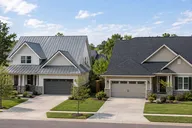 Is a metal roof worth it over asphalt shingles?A standing-seam metal roof costs about 1.6 times as much as asphalt shingles ($51,865 against $31,871) but is rated to last 40 to 80 years instead of 20 to 30.
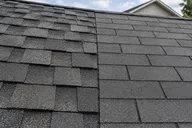 Are architectural shingles worth it over 3-tab shingles?Architectural shingles start near $3.50 a square foot against $1.50 for 3-tab, last about 30 years instead of 20, and carry longer warranties.
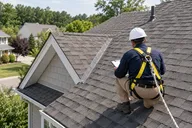 How does a roof insurance claim work after a storm?Insurance usually pays for sudden wind or hail damage, not wear. Wind/hail deductibles often run 1% to 5% of your home's insured value. How a claim works.
 What questions should you ask a roofer before you sign?The roofing questions to ask before you sign: tear-off, decking, ice barrier, ventilation, permit, crew, cleanup, payment and warranty papers, plus red flags.
 What happens during a roof replacement, step by step?An asphalt shingle roof usually goes on in one to three days. What happens before, during and after, from tear-off and deck repair to flashing and cleanup.