
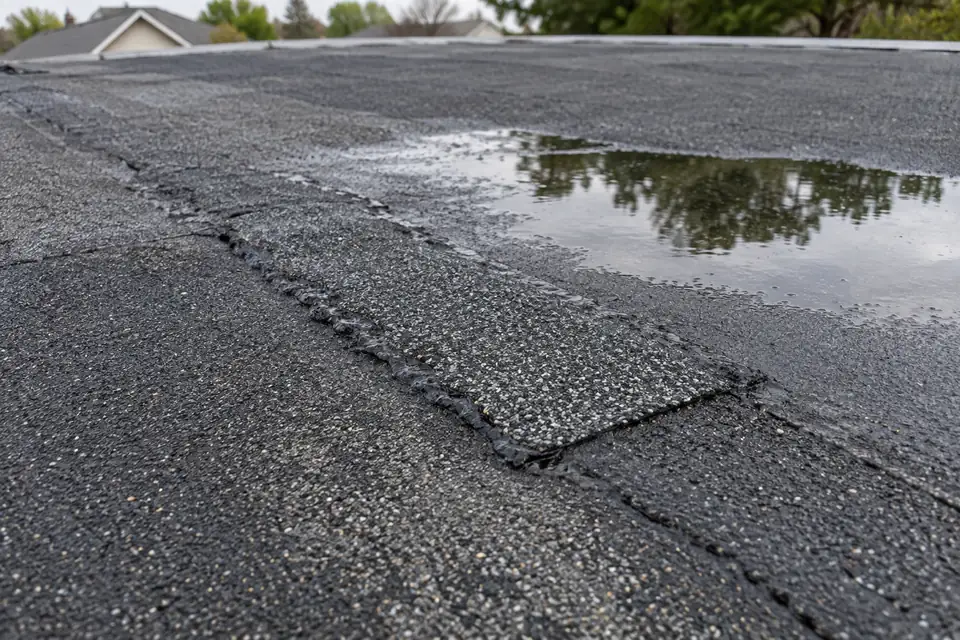
Most flat roof repairs cost $300 to $1,100, with an average of about $700, according to Fixr. HomeAdvisor puts the average flat roof repair at $400, and This Old House gives a range of $379 to $1,755. A clogged drain or a small puncture sits at the bottom of those ranges. A leak that has soaked the insulation, or a roof that holds water because it has sagged, can cost several times as much.
This guide covers the flat and low-slope roofs on homes: over a porch, a garage, a rear addition or a whole modern house. It does not cover commercial buildings. If you are weighing a whole new roof, our guide to flat roof replacement cost covers the membranes, their prices and drainage in detail.
What national sources say a repair costs
| Source | Typical range | Average |
|---|---|---|
| Fixr, updated January 27, 2026 | $300 to $1,100 | $700 |
| HomeAdvisor, updated June 20, 2026 | not given | $400 |
| This Old House, updated March 16, 2026 | $379 to $1,755 | not given |
The three sources agree that a typical repair is a job of a few hundred dollars to under two thousand. Fixr prices repairs at $2 to $10 a square foot and puts labor at $45 to $80 an hour, which it says makes up about 70% of the bill. Because labor dominates, a roofer's minimum charge often sets the real floor for a small job.
What goes wrong on a flat roof
A flat roof is one continuous membrane, so most failures happen where water sits or where that membrane is joined, cut or turned up a wall.
- Ponding. The Asphalt Roofing Manufacturers Association (ARMA) defines ponding as water still on the roof 48 hours or more after rain stops. It lists the harm it does: the extra weight can deform the deck, ice can damage the membrane, dirt and plants collect, and insulation below loses some of its value. InterNACHI's inspection library names the usual causes as too little slope, debris, and drains or scuppers in the wrong place.
- Blisters. Raised bubbles where the layers have come apart. InterNACHI's library says blisters in modified bitumen come from moisture in the roof, either air leaking up from the house or moisture trapped when the roof was put down, and in built-up roofs from uneven application, trapped debris or wrinkled felts.
- Seams. Every joint between two sheets is a weak point. Fixr calls seams a particular weak spot in single-ply membranes. On modified bitumen, InterNACHI's library links failed seams to poor torching and too little bitumen squeezed out at the lap.
- Flashing. Where the membrane turns up a wall, a parapet, a chimney or a pipe. InterNACHI's library links failing membrane flashing to the wrong materials or poor installation. Our guide to skylight and chimney flashing explains how flashing works.
- Cracks and alligatoring. A pattern of fine cracks, like a reptile's skin. InterNACHI's library says it happens as asphalt materials lose volatile compounds with age and shrink, and that the cracks can grow into splits that let water in.
- Punctures. Dropped tools, foot traffic and storm debris can hole a membrane.
What each repair costs
Fixr gives prices by problem and by the part of the roof being fixed. The ranges overlap because the same leak can be a quick patch or the first sign of a larger problem.
| Problem or area | Fixr's price range |
|---|---|
| Water ponding | $70 to $750 |
| Drain | $70 to $500 |
| Hole or puncture | $150 to $1,200 |
| Crack | $200 to $1,500 |
| Flashing | $200 to $750 |
| Seams | $200 to $1,000 |
| Blistering | $250 to $1,500 |
| Alligatoring | $250 to $1,250 |
| Membrane | $250 to $1,750 |
| Sagging | $800 to $2,500 |
| Leak | $150 to $4,000 or more |
Fixr notes that ponding can be as simple as a clogged drain, or a sign of a more serious problem such as a sagging roof. If the low spot is in the deck itself, see our guide to a sagging roof. Leaks have the widest range because the water may have run a long way from where it got in; our guide to roof leak repair explains how leaks are traced.
Repair costs by membrane
The material on your roof changes how a repair is made and what it costs. Fixr gives these repair prices per square foot:
| Roof material | Repair, per square foot |
|---|---|
| Built-up (tar and gravel) | $3 to $7 |
| Fiberglass | $3 to $8 |
| Modified bitumen | $3 to $8 |
| EPDM rubber | $5 to $10 |
| Concrete | $4 to $15 |
| Metal | $5 to $15 |
Fixr does not give separate repair prices for TPO or PVC. How their seams are made explains why a repair on each looks different:
- EPDM sheets are joined with pressure-sensitive tape, according to SPRI, the single-ply roofing industry's trade group. The EPDM Roofing Association says repairs start with washing the membrane and preparing the surface before the repair material goes on, and it describes EPDM as keeping its flexibility with age, which makes it easier to patch.
- TPO and PVC are thermoplastics. SPRI says their seams are joined with hot-air welders that melt the two sheets together, so a repair usually means welding a new piece on rather than gluing it.
- Modified bitumen and built-up roofs are layers of asphalt and reinforcing sheets, repaired with more of the same.
Before the roofer starts, ask what your membrane is and how they will join the repair to it. A patch in a material that does not bond with the roof around it is a patch that will come loose.
Blisters: leave them or cut them out?
The sources disagree. Fixr warns that blisters left alone can burst and let water in. Richard Fricklas, a retired roofing technical director writing in Buildings magazine, argues that a blister that is still holding air is also keeping water out, and that an intact blister is often best left alone. He recommends repair when a blister sits where people walk, has shrunk the overlap at a seam, or shows cracks, breaks or lost surfacing.
A sensible middle course: ask the roofer to photograph each blister, say whether it is broken or cracked, and price the ones that are separately from the rest of the job.
Coatings and resealing
A roof coating is a liquid painted or sprayed over the membrane that dries into a continuous skin. The Roof Coatings Manufacturers Association (RCMA) lists four main kinds: acrylic, asphalt, polyurethane and silicone. It says coatings form an elastic, waterproof film that bridges small cracks and shields the roof from sun and water.
| Work | Price | Source |
|---|---|---|
| Resealing, as maintenance | $400 to $1,250 | Fixr |
| Resurfacing part of the roof | $250 to $1,500 | Fixr |
| Resurfacing a whole roof | $5,000 or more | Fixr |
How often: Fixr suggests budgeting to reseal every two to four years, and This Old House says to coat a flat roof about every five years. InterNACHI's life expectancy chart gives an aluminum roof coating 3 to 7 years.
A coating protects a roof that is still sound. It is not a cure for a wet deck, soaked insulation or a roof that has sagged. Before you pay for one, ask the roofer how they have checked that the roof underneath is dry, and whether the coating they propose is compatible with your membrane.
When a repair stops making sense
Fixr's rule of thumb is that repair makes sense when the roof has at least half its life left and the damage is in one place; replacement is worth pricing when damage covers half the roof or more, appears in several places, or has caused secondary damage such as stains inside. HomeAdvisor points the same way: repair for isolated leaks and split seams, replacement for leaks across different areas, problems in the layers underneath, or a roof near the end of its life.
A few signs that point toward replacement:
- The membrane is near the end of its expected life. InterNACHI's chart gives EPDM 15 to 25 years, TPO 7 to 20, modified bitumen 20 and built-up roofing 30.
- Leaks keep returning in new places.
- The insulation or deck under the membrane is wet.
- The roof holds water that a repair cannot drain, because the fix is adding slope.
Fixr compares an average repair of about $700 with an average replacement of about $8,000. If a repair estimate is creeping toward a sizable share of a new roof, ask for a replacement price too. Our guide to flat roof replacement cost covers what that involves, and our guide to repairing or replacing a roof walks through the decision for any roof.
What a clear repair estimate includes
- What failed and what caused it, with photos.
- The membrane type, and the repair material and method.
- The area repaired in square feet, and the price.
- A price for any wet insulation or rotten deck found once the roof is opened.
- Whether finding the leak is included, and a return visit if it continues.
- The contractor's warranty on the repair, in writing, and whether the repair affects any warranty still on the membrane.
Frequently asked questions
How much does it cost to fix a leak in a flat roof?
Fixr gives a range of $150 to $4,000 or more for a leak, because the price depends on how far the water has travelled and what it has soaked. A small puncture found quickly is at the low end.
Can I patch a flat roof myself?
A patch has to match the membrane and bond to a surface that has been cleaned and prepared, as the EPDM Roofing Association describes. TPO and PVC seams are welded with hot air, which SPRI says is done with a hot-air welder. For anything past a small, easy-to-reach spot, have a roofer do it.
Is water standing on my flat roof a problem?
ARMA treats water that is still there 48 hours or more after rain as ponding. A roof that dries within a day or two is normal; one that holds water longer is worth raising with a roofer.
Does a coating stop leaks?
A coating can bridge small cracks, but it is meant to protect a sound roof, not to fix a failed seam or a wet deck. Have the leak found and repaired first.
Will insurance pay for a flat roof repair?
Homeowners insurance generally covers sudden damage, such as a storm, and not wear or poor drainage. Your policy decides; this is not insurance advice. See our guide to roof insurance claims.
How we got these numbers
HomeAnvil does not yet publish price data of its own. Every figure on this page comes from a published source, read on September 26, 2026:
- Fixr, flat roof repair cost, updated January 27, 2026: the average and range, the price per square foot, labor, repair prices by problem, area, method and material, resealing and resurfacing, the resealing interval, and its repair-or-replace guidance.
- HomeAdvisor, flat roof replacement cost, updated June 20, 2026: the average flat roof repair and its repair-or-replace guidance. HomeAdvisor says its figures come from a survey of its customers and other published research.
- This Old House, flat roof replacement cost, updated March 16, 2026: the repair range and the five-year coating interval.
- Asphalt Roofing Manufacturers Association, ponding water basics: the definition of ponding and the harm it does.
- InterNACHI Inspection Narrative Library, modified bitumen and inspecting built-up roofs: the common defects and their causes.
- InterNACHI, standard estimated life expectancy chart for homes: membrane and aluminum coating lifespans.
- Richard L. Fricklas, blisters: repair or re-cover?, Buildings, July 1, 2015: when to leave a blister and when to repair it.
- SPRI, single-ply roofing 101, January 2019: how EPDM, TPO and PVC seams are made.
- EPDM Roofing Association, repair and restoration: how EPDM is prepared and repaired.
- Roof Coatings Manufacturers Association, about roof coatings: the four coating types and what a coating does.
We will update this page when these sources publish new figures, and the date above will say when.
Related guides
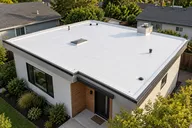 How much does a flat roof replacement cost?A flat roof replacement typically costs $3,331 to $11,558, or $4 to $35 a square foot. Membranes, lifespans, drainage, and why shingles can't go on it.
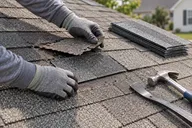 How much does a roof repair cost?Most roof repairs cost $395 to $1,967, about $1,173 on average. Prices by problem: shingles, flashing, leaks, decking, vents, fascia and sagging.
 How to find and fix a roof leak, and what it costsA roof leak repair typically costs $350 to $1,500, about $800 on average. How to trace a leak from the attic, what to do first and what each fix costs.
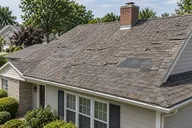 Should you repair or replace your roof?Most roof repairs cost $395 to $1,967; a replacement typically costs $5,900 to $13,400. How age, damage, layers and repair history decide which one you need.
 What does a sagging roof mean, and how serious is it?A sagging roof points to water damage, rot, too much weight or undersized framing. Repairs typically cost $750 to $3,000; when to call a structural engineer.
 How long does a roof last?Architectural shingles last about 30 years, 3-tab about 20, metal 40 to 80, slate 60 to 150. What shortens a roof's life, and why a warranty isn't a lifespan.