
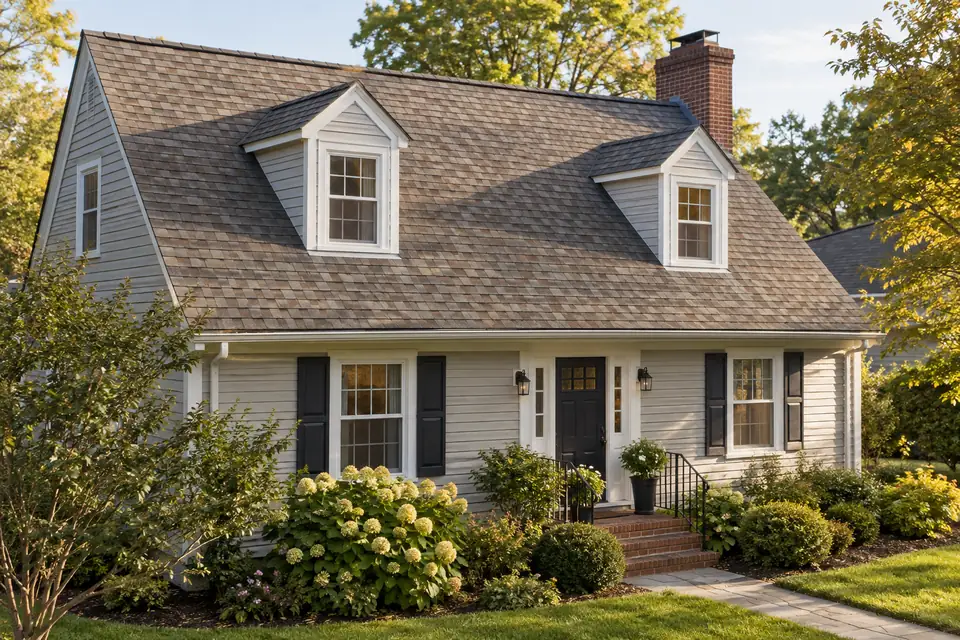
An asphalt shingle roof, the kind on about 80% of home roofs in the United States according to IBHS, lasts about 20 years for basic 3-tab shingles and about 30 years for architectural shingles, according to the life expectancy chart published by InterNACHI, the home inspectors' association. Metal lasts 40 to 80 years. Slate is rated at 60 to 150 years, copper at more than 70 and clay or concrete tile at more than 100. Those are estimates for a roof that was installed well and looked after. Weather, ventilation, storms and upkeep move your own roof's life up or down.
Lifespan by roofing material
Two national references give estimated service lives. InterNACHI, the home inspectors' association, publishes a chart. The National Association of Home Builders published its study in 2007, from interviews with manufacturers and trade groups.
| Material | InterNACHI chart | NAHB study, 2007 |
|---|---|---|
| Asphalt shingles, 3-tab | 20 years | 20 years (asphalt, not split by type) |
| Asphalt shingles, architectural | 30 years | not listed separately |
| Wood shingles or shakes | 25 years | 30 years |
| Fiber cement shingles | 25 years | 25 years |
| Metal | 40 to 80 years | not listed |
| Simulated slate | 10 to 35 years | 50 years |
| Slate | 60 to 150 years | more than 50 years |
| Clay or concrete tile | more than 100 years | lifetime |
| Copper | more than 70 years | lifetime |
For low-slope and flat roofs, InterNACHI lists modified bitumen at 20 years, EPDM rubber at 15 to 25 years, TPO at 7 to 20 years and built-up roofing at 30 years.
The two sources disagree in places, most of all on simulated slate, and the NAHB figures are from 2007. Read any single number as the middle of a range, not a promise.
Why the numbers are ranges
Both sources say the same thing about why. A roof's life depends on the weather where it sits, how the house was built and designed, the quality of the material, and whether it was maintained. InterNACHI adds that hot climates cut asphalt shingle life sharply, and that roofs in severe weather may not reach the estimate.
IBHS, the Insurance Institute for Business & Home Safety, has tested asphalt shingles left out in the weather on its research roofs since 2013. Its results, published in September 2026 after ten years of aging, found that most products' resistance to wind begins to decline between years five and ten, and that the rate varied widely from one product to another, even among products with the same top wind rating. It also found that sun, temperature swings and the direction a roof faces all changed how shingles aged.
What shortens a roof's life
- Sun and heat. Ultraviolet light and heat age asphalt. InterNACHI names hot climates as a major factor.
- Hail, including small hail. IBHS found that small hail knocks protective granules off shingles, exposing the asphalt to sunlight and speeding up aging. Shingles that had weathered naturally and then taken repeated small hail were up to ten times more susceptible to damage from later large hail than new shingles.
- Wind. IBHS calls shingles coming unsealed the single greatest driver of wind vulnerability, and it found that wind performance declines as shingles age.
- Poor ventilation. Owens Corning's shingle warranty excludes damage caused by inadequate roof ventilation or unvented attics, which tells you the manufacturer counts it as a cause of failure.
- Installation mistakes. The same warranty excludes damage from installation that did not follow the manufacturer's instructions and local building code.
- Things on and above the roof. The warranty also lists foot traffic, falling branches, debris from trees, power washing, coatings, and equipment or solar panels added after the roof was finished.
- Problems next to the roof. The warranty also excludes leaks from chimneys with loose mortar, faulty flashing and badly designed gutters, none of which the shingles can make up for.
What helps a roof reach its full life
- Look at it from the ground after every big storm. NRCA, the roofing contractors' association, advises homeowners to inspect only from ground level and leave the climbing to a professional.
- Keep trees off it. Triple-I, the insurance industry's information group, advises cutting down dead trees near the house and pruning branches that reach it.
- Keep water moving. Clear debris from gutters and drains so water leaves the roof edge.
- Get the attic ventilation checked when the roof is replaced, since the shingle warranty excludes damage from poor ventilation.
- In hail-prone areas, ask about impact-rated shingles. IBHS rates impact-resistant asphalt shingles against its own hail test, and it found that most asphalt shingles, impact-rated ones included, hold up well against hail for about five years without earlier hail damage.
A warranty is not a lifespan
A "lifetime" shingle warranty does not mean the roof lasts a lifetime. Read what the word means in the warranty. In Owens Corning's standard limited lifetime shingle warranty for shingles bought from January 1, 2026, lifetime means for as long as you own the home, and it applies to a single-family house lived in by its owner. The coverage shrinks over time:
| Years after installation | What the warranty pays toward defective shingles |
|---|---|
| 1 to 10 | Replacement shingles and the labor to install them |
| 11 to 40 | A share of the shingle cost only, starting at 80% and falling 2 points a year; no labor |
| 41 and after | 20% of the shingle cost; no labor |
The warranty gives its own example: a claim in the fifteenth year pays 72% of the shingle cost and no labor. Protection against wind blow-offs lasts 15 years from installation. The warranty covers manufacturing defects only. It does not cover hail, winds above the rated speed, installation errors, poor ventilation or parts made by other companies, such as flashing and decking. It can be transferred to a second owner once.
Warranties differ between manufacturers and product lines, so ask for the actual warranty document for the shingle on your estimate. Because the manufacturer does not cover installation errors, also ask your contractor, in writing, what their own warranty on the labor covers and for how long.
How age affects insuring your roof
The age of your roof matters to your insurer as well as to you. Triple-I says that when a roof is more than 20 years old, most insurers require an inspection before they will write a policy, and some decline older roofs or cover them only at actual cash value, which subtracts depreciation from any payment. Insurance generally pays for sudden damage, such as wind or hail, and not for a roof that has worn out. Check your policy for how it treats your roof's age, and see our guide to how a roof insurance claim works.
How to tell how old your roof is
The lifespans above only help if you know when your roof went on. If you did not have it put on yourself, work through these sources, starting with the paperwork, which is more reliable than the roof's looks.
| Where to look | What it can tell you | The catch |
|---|---|---|
| Your own contract, invoice and warranty papers | The installation date | Only if you, or a seller who passed them on, kept them |
| The building department's permit record | When a permit was issued and the work inspected | No record if the work was done without a permit |
| Papers from when you bought the house | The age the seller or inspector gave | Often an estimate, not a record |
| Leftover shingle bundles | When the shingles were made | Made is not the same as installed |
| The roof itself | A rough stage of wear | Wear varies too much to give a year |
Warranty and contract papers. A shingle warranty counts from installation: in the Owens Corning warranty described above, the coverage steps down by years after installation. So the warranty registration, and the roofer's contract and final invoice, are the first places to look for the date.
Permit records. HomeAdvisor says most municipalities require a permit for a roof replacement. If one was pulled, the building department has a record of it, so ask for the permit history of your address. A replacement done without a permit leaves no record. Our guide to roof replacement permits explains how permits work.
Sale documents. Look through the home inspection report and any disclosure the seller gave you; what sellers must disclose depends on your state's rules. Treat an age in an inspection report with care: under InterNACHI's standards of practice, a home inspector describes the type of roof covering but is not required to predict its service life. Triple-I also suggests that buyers ask the seller for a loss history report, known as a C.L.U.E. or A-PLUS report, which lists past insurance claims. A roof claim in that history may point to when the roof was last repaired or replaced.
Leftover shingles. If spare bundles were left in a garage or attic, check their ends. GAF, a shingle maker, explained in a 2011 technical bulletin that one end of each of its bundles is printed with the color name, a product code, and the date and time of manufacture. Other makers mark their bundles in their own ways. The date tells you when the shingles were made, so the roof went on after that.
The roof itself. A roofer or inspector can judge how far along the shingles are, but not their birthday. InterNACHI describes how asphalt shingles age: granules wash off with weathering, the shingles become brittle as the compounds that keep them flexible dissipate, the surface cracks, and the shingles may curl or distort as they absorb moisture. It also notes that the rate depends on the shingle's quality, the roof's orientation and slope, the climate and upkeep, which fits what IBHS found on its research roofs. Our guide to the signs you need a new roof shows what that wear looks like.
Once you have a date, keep a copy with your house papers. Triple-I says most insurers require an inspection before insuring a roof over 20 years old, so the age matters when you shop for insurance as well as when you plan a replacement.
When to start planning a replacement
Compare your roof's age with the chart above for its material. An architectural shingle roof in its late twenties, or a 3-tab roof near 20, is at the age the references give for its life. That does not mean it must come off, but it is the time to have it inspected, to watch it after storms, and to put a replacement in the budget. Our guide to what a roof replacement costs explains how to price one.
Frequently asked questions
How long does an architectural shingle roof last?
About 30 years, according to InterNACHI's chart, against about 20 years for 3-tab shingles. Heat, hail, wind and ventilation can shorten that.
Does a lifetime warranty mean the roof lasts a lifetime?
No. In the Owens Corning warranty reviewed here, lifetime means as long as you own the home. After the first ten years it pays only a declining share of the shingle cost, with no labor, and only for manufacturing defects.
Which roofing material lasts the longest?
Slate, clay or concrete tile and copper. InterNACHI puts slate at 60 to 150 years, tile at more than 100 and copper at more than 70.
Can small hail shorten a roof's life?
Yes. IBHS found that small hail knocks granules off asphalt shingles, speeds up their aging and makes them far more vulnerable to the next large hailstorm.
Should I replace my roof at 20 years?
Not on age alone. Have it inspected and compare what you find with its expected life. Age does matter to insurers: Triple-I says most require an inspection before insuring a roof over 20 years old.
How we got these numbers
HomeAnvil does not publish lifespan data of its own. Every figure on this page comes from a published source, read on September 26, 2026:
- InterNACHI (International Association of Certified Home Inspectors), Standard estimated life expectancy chart for homes: every lifespan in the first column of the table and the low-slope roof figures. The chart gives no publication date.
- National Association of Home Builders and Bank of America Home Equity, Study of Life Expectancy of Home Components, February 2007, read from a copy of the study hosted by a third party: the second column of the table.
- IBHS, Research reveals critical links in asphalt shingle wind performance after 10 years of aging, September 22, 2026: aging and wind performance.
- IBHS, Roof aging farm research: the research roofs, started in 2013.
- IBHS, Impact testing of high concentrations of small hail: small hail, granule loss and the ten-times figure.
- IBHS, 2025 Year in Review: hail performance by shingle age.
- IBHS, Relative hail impact resistance of asphalt shingles: IBHS's impact-resistant shingle ratings, and asphalt's share of about 80% of installed home roofs.
- Owens Corning, Standard product limited lifetime warranty on roofing shingles and components, for shingles purchased after January 1, 2026: the meaning of lifetime, the coverage table, the year-15 example, wind coverage, exclusions and transfer.
- NRCA, NRCA urges homeowners affected by severe weather to use caution, July 27, 2022: inspecting from the ground and clearing drains.
- Triple-I, How your roof influences your home and business insurance: insuring roofs over 20 years old.
- Triple-I, Am I covered?: trimming trees near the house.
- HomeAdvisor, roof replacement cost, updated June 17, 2026, read on September 26, 2026: most municipalities requiring a permit for a roof replacement.
- InterNACHI, home inspection standards of practice, read on September 26, 2026: what a home inspector must describe on a roof, and that the inspector is not required to predict its service life.
- InterNACHI, Mastering roof inspections: asphalt composition shingles, part 30, read on September 26, 2026: how asphalt shingles age, and what changes the rate. The page carries no date.
- GAF, technical advisory bulletin TAB-R 2011-129, shingle lot numbers explained, May 27, 2011, read on September 26, 2026 from a copy hosted by a third party: what is printed on the ends of GAF shingle bundles.
- Triple-I, home buyer's insurance guide, read on September 26, 2026: asking the seller for a C.L.U.E. or A-PLUS loss history report.
- Progressive, Does homeowners insurance cover roof damage?, updated January 23, 2025: wear and tear is not covered. This is an insurer's consumer guide.
We will update this page when these sources publish new figures, and the date above will say when.
Related guides
 How much does a roof replacement cost?A roof replacement typically costs $5,900 to $13,400, or $400 to $1,100 per square installed. How to measure your roof, what moves the price and how to compare estimates.
 Is a metal roof worth it over asphalt shingles?A standing-seam metal roof costs about 1.6 times as much as asphalt shingles ($51,865 against $31,871) but is rated to last 40 to 80 years instead of 20 to 30.
 Are architectural shingles worth it over 3-tab shingles?Architectural shingles start near $3.50 a square foot against $1.50 for 3-tab, last about 30 years instead of 20, and carry longer warranties.
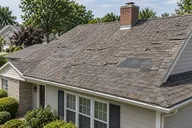 Should you repair or replace your roof?Most roof repairs cost $395 to $1,967; a replacement typically costs $5,900 to $13,400. How age, damage, layers and repair history decide which one you need.
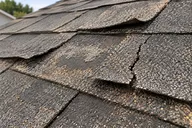 What are the signs you need a new roof?The signs a roof needs replacing, outside and in: age past 20 to 30 years for shingles, bald or curling shingles, repeat leaks, a sagging line. What each means.
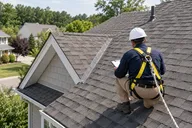 How does a roof insurance claim work after a storm?Insurance usually pays for sudden wind or hail damage, not wear. Wind/hail deductibles often run 1% to 5% of your home's insured value. How a claim works.
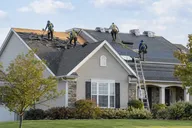 What happens during a roof replacement, step by step?An asphalt shingle roof usually goes on in one to three days. What happens before, during and after, from tear-off and deck repair to flashing and cleanup.
 Should you replace gutters with a new roof?Often, if they are old or sagging. New gutters cost about $3 to $45 a linear foot by material, and guards $6 to $45. Sizing, fascia, and when to keep yours.