
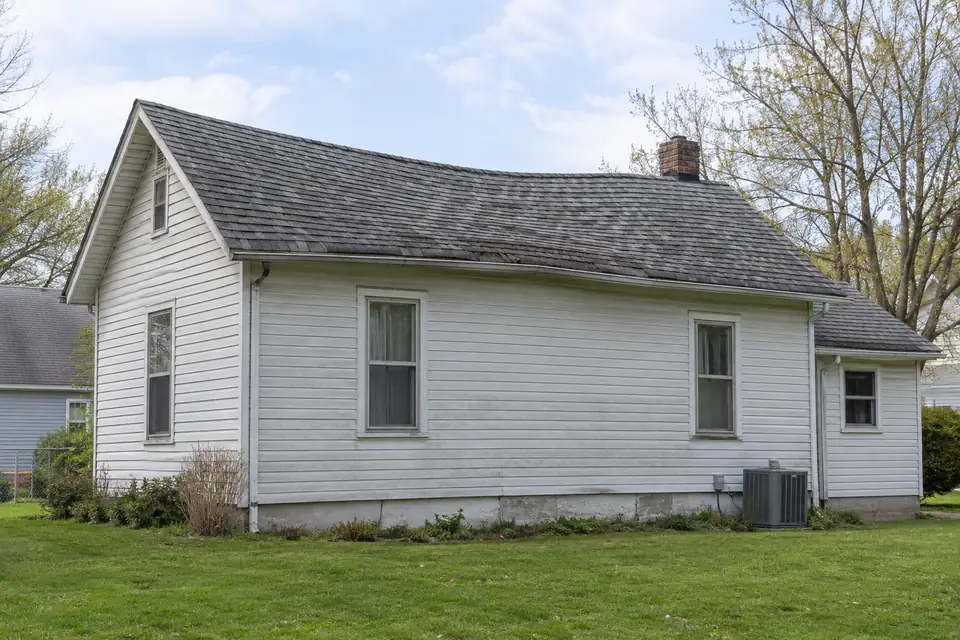
A sagging roof means something under the shingles is no longer carrying the load it should. The usual causes are water that has rotted the deck or framing, more weight than the roof was built for, or framing that was too small or too widely spaced from the start. Fixing it typically costs $750 to $3,000, according to HomeAdvisor, and Fixr gives a wider $800 to $5,000. A slight dip that has been there for decades is different from a sag that is new or growing: a new sag, or a sag with cracking sounds, doors that stick or leaks, needs someone qualified to look at it soon.
Where the sag is tells you a lot
Stand back from the house, look along the ridge and each roof plane, then look at the same spots from the attic with a flashlight. Where the roof dips points to what is wrong.
| What you see | What it often means | Source |
|---|---|---|
| The ridge dips in the middle, like a swayback | Rafter ties that are too far apart, badly spliced or missing, letting the walls spread | InterNACHI |
| A whole roof plane dips between ridge and eaves | Rafters sagging under their load, common in older houses with small, over-spanned rafters | InterNACHI |
| A wavy surface, dipping between each rafter or truss | Roof deck panels sagging between their supports: too thin for the span, missing edge clips, moisture or rot | McGarry and Madsen Inspection |
| A local dip or hump in one spot | Broken or badly installed framing | InterNACHI |
| Water standing on a flat roof in a low spot | Possible overstress of the deck or framing | FEMA |
The table is a starting point. Only an inspection can tell how far the damage has gone.
Water damage and rot
Water is the cause you can often see. McGarry and Madsen Inspection, a home inspection firm, calls roof leaks the most common cause of sagging sheathing, because even a small leak rots the wood over time. It also names poor attic ventilation, which leaves the deck damp. HomeAdvisor lists rot from snow or water buildup among the main causes of a sagging roof.
Our guides to roof leak repair and roof ventilation cover both causes, and our guide to roof decking and underlayment explains what the deck is and what replacing it costs.
Too much weight
HomeAdvisor also lists weight building up on the roof as a cause. FEMA's snow load guide shows how quickly snow and ice add up:
| Load | Weight per square foot of roof |
|---|---|
| 1 foot of light, dry fresh snow | about 3 pounds |
| 1 foot of wet, heavy fresh snow | about 21 pounds |
| 1 inch of ice | a little under 5 pounds |
| 1 foot of ice | about 57 pounds |
FEMA also warns that snow drifts and slides off a higher roof onto a lower one, such as a porch or sunroom under a gable, loading the lower roof more heavily than the rest. On a flat or low-slope roof, FEMA counts water collecting away from the drains among the warning signs of overstress. Our guide to flat roof repair covers ponding.
Framing that was too small from the start
Some sags are built in. InterNACHI, the home inspectors' association, says sagging rafters are relatively common in homes built before the 1960s, when rafters were often 2x4s or 2x6s, placed too far apart or spanning too far. It says rafters are usually set 24 inches apart, and wider spacing is worth checking for sag.
The other built-in weakness is at the ceiling. InterNACHI explains that rafter ties, which join the bottoms of opposing rafters, stop the weight of the roof from pushing the tops of the walls outward. When they are too far apart, badly spliced or missing, the walls spread and the ridge drops. Collar ties, higher up near the ridge, do a different job: InterNACHI says they resist wind uplift.
An old sag that has not moved in years is not the same as a new one. InterNACHI tells inspectors that where a house was not required to meet today's code when it was built, the thing to look for is signs of failure, such as sagging or broken rafters, rather than the old design itself.
How serious is it?
FEMA's snow load guide lists warning signs that a roof deck or framing is overstressed:
- Sagging ceilings, or ceiling boards falling out of place.
- Popping, cracking and creaking sounds.
- Sagging roof framing or roof sheathing.
- Bowing trusses.
- Doors or windows that no longer open or close.
- Cracked or split wood framing.
- Cracks in walls or masonry.
- Severe roof leaks.
- Water collecting on a low-slope roof away from its drains.
FEMA says that if you see any of these, the building should be promptly evacuated and a qualified design professional, such as a professional engineer, should inspect the structure. HomeAdvisor's advice is plain: a sagging roof is unstable and unsafe, so don't put off the repair. McGarry and Madsen Inspection notes that a minor sag in the deck may be only cosmetic, but that its cause should be fixed before it becomes structural.
If the sag is sudden, growing, or comes with any of the signs above, treat it as an emergency: keep people out of the rooms beneath it and call for help the same day. Our guide to emergency roof repair covers what to do first.
Roofer, contractor or structural engineer?
Each has a place.
- A roofer can find a leak, replace rotten decking and tell you whether the framing below looks sound. HomeAdvisor says a roofer can spot a sagging roof and stop moisture damage early.
- A framing or general contractor does the structural repair. InterNACHI recommends that sagging rafters be stabilized by a qualified contractor.
- A structural engineer assesses the structure when FEMA's warning signs are present; FEMA calls for a qualified design professional, such as a professional engineer, in that case. FEMA also recommends one to work out what load a roof can carry when there are no drawings of it.
Whether a structural repair needs a permit depends on where you live; check your state's and your local building department's rules.
What repairs cost
| Work | Price | Source |
|---|---|---|
| Sagging roof repair, typical | $750 to $3,000 | HomeAdvisor |
| Sagging roof repair, minor fix to reinforcement or rafter repair | $800 to $5,000 | Fixr |
| Rafter repair | $300 to $5,000 | Fixr |
| Truss repair | $500 to $5,000 | Fixr and HomeAdvisor |
| Roof decking repair | $150 to $1,000 | Fixr |
| Water damage repair | $150 to $6,000 | Fixr |
| Structural engineer's inspection | $344 to $776, $555 average | HomeAdvisor |
| Structural engineer's general report | $350 to $800, $550 average | HomeAdvisor |
| Structural drawings, per sheet | $500 to $5,000 | HomeAdvisor |
Fixr says a minor structural issue that can be fixed without replacing framing can cost as little as $800, while reinforcement or rafter repair can reach $5,000. HomeAdvisor says replacing structural beams puts a job at the high end of its range. If the roof covering is also near the end of its life, our guide to repairing or replacing a roof helps you weigh one job against the other.
Stabilize it, don't force it flat
It is tempting to jack an old sag back to a straight line. InterNACHI's guidance for inspectors usually recommends stabilizing a sagging roof instead, because forcing framing back into place can crack the walls and ceilings below. The typical fix it describes for sagging rafters is a purlin system: a horizontal beam under the rafters, held up by braces that bear on the tops of interior walls. For a ridge that has dropped because the walls spread, the rafter ties are what need attention.
Ask whoever proposes a repair whether it will stabilize the roof as it is or straighten it, what it does to the ceilings and walls below, and who designed it.
Frequently asked questions
Is a sagging roof dangerous?
It can be. HomeAdvisor calls a sagging roof unstable and unsafe, and FEMA says that sagging framing, cracking sounds, sticking doors or cracks in walls are signs of overstress that call for leaving the building and having an engineer inspect it. A slight, long-standing dip is less urgent, but it still needs a look.
How much does it cost to fix a sagging roof?
HomeAdvisor puts a typical repair at $750 to $3,000 and Fixr at $800 to $5,000. A structural engineer's inspection adds $344 to $776, according to HomeAdvisor.
Can a new roof fix a sagging roof?
Not on its own. New shingles do not strengthen the deck or framing beneath them, so rotten decking or failed framing has to be repaired as part of the job. Ask the roofer to check the deck and framing and to price that work as separate lines.
Do I need a structural engineer?
If you see any of FEMA's warning signs, such as sagging framing, bowed trusses, cracking sounds or sticking doors, FEMA says to have a professional engineer inspect the structure. A slight wave in the deck from a leak may be cosmetic, according to McGarry and Madsen Inspection, but its cause still needs fixing.
Will insurance pay to fix a sagging roof?
Homeowners insurance generally covers sudden damage, such as a storm, and not wear or slow deterioration. Your policy decides; this is not insurance advice. See our guide to roof insurance claims.
How we got these numbers
HomeAnvil does not yet publish price data of its own. Every figure on this page comes from a published source, read on September 26, 2026:
- HomeAdvisor, roof repair cost, updated June 19, 2026: the sagging roof repair range, its causes, truss repair, structural beams, and its advice not to delay. HomeAdvisor says its figures come from a survey of its customers and other published research.
- Fixr, roof repair cost, updated January 21, 2026: the sagging roof range, and rafter, truss, decking and water damage repair.
- HomeAdvisor, structural engineer cost, updated June 17, 2026: inspection, report and drawing costs.
- FEMA, Snow Load Safety Guide, FEMA P-957, January 2013: snow and ice weights, drifting and sliding snow, warning signs of overstress, evacuation and when to call an engineer.
- InterNACHI, Mastering Roof Inspections: Roof Framing, Part 1, by Kenton Shepard and Nick Gromicko: rafter spacing, rafter ties, collar ties and stabilization with a purlin system.
- InterNACHI Inspection Narrative Library, inspecting the roof structure exterior: sagging ridges, sagging rafters in older homes, localized dips, and stabilization rather than correction.
- McGarry and Madsen Inspection, why is my roof sheathing sagging between the trusses?, June 13, 2018: causes of deck sag, leaks as the most common, and when sag is cosmetic.
We will update this page when these sources publish new figures, and the date above will say when.
Related guides
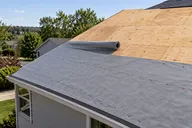 Roof decking and underlayment: what they are and costReplacing roof decking costs $2 to $5 a square foot; a sheet of plywood or OSB runs $9 to $64. How the deck, underlayment and ice barrier work.
 How to find and fix a roof leak, and what it costsA roof leak repair typically costs $350 to $1,500, about $800 on average. How to trace a leak from the attic, what to do first and what each fix costs.
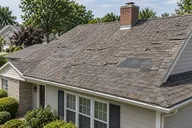 Should you repair or replace your roof?Most roof repairs cost $395 to $1,967; a replacement typically costs $5,900 to $13,400. How age, damage, layers and repair history decide which one you need.
 How much attic ventilation does a roof need?Code calls for 1 square foot of net free vent area per 150 square feet of attic, split between intake and exhaust. How vents work, warning signs and costs.
 How much does it cost to repair a flat roof?Most flat roof repairs cost $300 to $1,100, about $700 on average. Ponding, blisters, seams and flashing, costs by membrane, coatings, and when to replace.
 Roofing emergency: what to do and who should tarp itAn open roof or active leak needs a tarp, not a repair. Emergency tarping costs $150 to $3,300, about $450 on average (HomeAdvisor). Safety, receipts, the fix.