
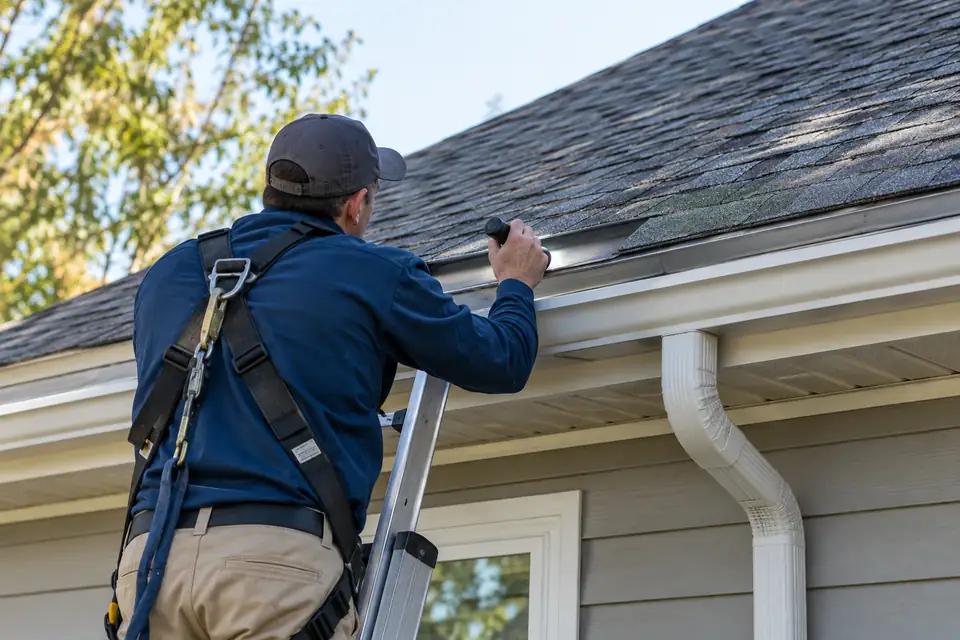
Most professional roof inspections cost $125 to $383, with a reported average of $252, according to HomeAdvisor's June 2026 figures. A standard look from the roof and the ground sits at the low end; a drone survey costs $150 to $400 and an infrared scan $400 to $600. Fixr, another cost site, puts the typical range higher, at $307 to $571. What you pay depends on the size, pitch and material of your roof, how the inspector gets to it, and whether you need a written certification at the end.
What a roof inspection costs
Two national cost sites publish figures, and they do not agree.
| Source | Typical range | Average | Lowest and highest reported |
|---|---|---|---|
| HomeAdvisor, updated June 19, 2026 | $125 to $383 | $252 | $75 to $1,150 |
| Fixr, updated January 31, 2025 | $307 to $571 | $426 | $120 to $800 |
HomeAdvisor says its figures come from surveys of its customers; Fixr's page is older. Neither is wrong. They are samples of different jobs, and the gap is a reminder to ask what an inspection includes before you compare prices. HomeAdvisor notes that some inspectors charge more for a large roof, either as a flat premium or by the square foot.
Costs by type of inspection
HomeAdvisor breaks the price down by method.
| Type | What happens | Typical cost |
|---|---|---|
| Physical (visual) inspection | An inspector examines the roof in person | $75 to $200 |
| Drone inspection | A drone films the roof surface close up, for roofs too steep or hard to reach safely | $150 to $400 |
| Infrared (thermal) inspection | A thermal camera looks for moisture and heat loss the eye cannot see | $400 to $600 |
| Roof certification | A written statement of the roof's current condition and expected remaining life, issued after an inspection | $75 to $200 |
Drone inspections suit steep roofs and tall homes. HomeAdvisor suggests one when the roof is too steep or hard to get onto, and says the drone flies around the roof recording close-up footage of the whole surface for the inspector to review. Fixr recommends them for very steep roofs, for houses with several stories where a physical inspection would be unsafe, and for roofing that cannot take a person's weight, and says they can be surprisingly accurate. Photos from a drone cannot replace feeling for soft spots or looking into the attic, so ask whether someone will also check those.
Anyone flying a drone for pay needs federal permission. The FAA says a drone under 55 pounds can be flown for work or business under its Part 107 rules, and that flying under those rules requires a Remote Pilot Certificate, which the pilot must keep at hand while flying. Asking to see it is a fair question before a drone goes up over your house. Ask too whether the footage and stills will be yours to keep, since they are a dated record of the roof's condition.
Infrared inspections are mostly for flat and low-slope roofs. InterNACHI, the home inspectors' association, explains that a thermal camera finds wet insulation inside a low-slope roof because wet areas give off heat more slowly than dry ones. It works best at dusk after a sunny, clear day, in light wind, and InterNACHI suggests confirming any suspect area with a moisture meter. Fixr also describes infrared as mainly a tool for commercial and flat roofs without attics. On a typical sloped shingle roof, a physical inspection is usually the right starting point.
A certification is not a warranty. HomeAdvisor says it confirms the roof's current condition and expected lifespan, and that a lender or insurer may ask for one.
Roofer, home inspector or insurance adjuster
Three different people may inspect your roof, and they do different jobs.
| Who | What it costs you | What they are there to do |
|---|---|---|
| A roofing contractor | A fee in the ranges above, though some advertise a free inspection | Find problems, recommend a repair or replacement, and price the work |
| A home inspector, when you buy a home | Part of a general home inspection, which HomeAdvisor puts at $296 to $425 ($344 on average) | Describe the roof and report visible defects as one item in the whole house |
| Your insurer's adjuster, after a claim | Nothing; Triple-I says the insurer provides its adjuster at no charge | Decide what storm damage the policy covers and what it will pay |
The home inspector is a generalist. Under the InterNACHI standards of practice, a home inspector inspects the roof covering, gutters, downspouts, vents, flashing, skylights, chimney and other penetrations, describes the type of roof covering, and reports signs of active leaks. The inspector is not required to walk on the roof, to predict how long it will last, or to certify it. HomeAdvisor says a roof check within a home inspection is less thorough than a dedicated roof inspection, and lists a separate roof inspection as an add-on at about $230.
The adjuster works for the insurer. NRCA, the roofing contractors' association, says the insurer decides whether the damage makes the roof a total loss and how big the roof is. NRCA suggests getting a roofer's own assessment too; if the two disagree, you can ask for a reinspection with the adjuster and the roofer together, and NRCA says reinspections are common. You may also hire a public adjuster to work for you, but Triple-I notes their fee can be as much as 15% of the settlement. Our guide to how a roof insurance claim works covers the rest of the process.
What a roof inspection checks
A thorough roof inspection looks at the surface, the edges, everything that goes through the roof, and the space under it. NRCA says regular inspections can find:
- Cracked, warped or missing shingles.
- Loose seams and worn or damaged flashing.
- Heavy granule buildup in the gutters or at the downspouts.
Inside the house, NRCA says to watch for cracked paint, discolored drywall and peeling wallpaper, which can be signs of a leak above. A roofer should also look at the vents, the chimney and skylight flashing, and the gutters and downspouts, the parts the InterNACHI standards list for a home inspector.
After a storm, the inspection shifts to storm damage. Our guide to recognizing hail damage on a roof explains what an inspector looks for on shingles, metal and gutters, and our guide to the signs you need a new roof covers the signs of age.
How often to have your roof inspected
NRCA recommends twice-yearly roof inspections, in the spring and the fall. HomeAdvisor's page, citing NRCA, says once a year; NRCA's own consumer page says twice. Beyond the calendar, these are the moments an inspection earns its fee:
- After a severe storm. NRCA advises homeowners to look only from the ground and to have a professional roofing contractor assess the damage promptly.
- When you buy or sell a home. The home inspection covers the roof in general terms; a dedicated roof inspection goes further.
- When you insure an older roof. Triple-I says most insurers require a roof more than 20 years old to pass an inspection before they will write a policy.
- Before you decide to repair or replace. An inspection with photos lets you price both; see our guide to whether to repair or replace your roof.
You can do some of the watching yourself. NRCA says homeowners can check their roof each season from a firmly braced ladder and clean debris from the gutters, and leaves the rest to professionals.
What the inspection report should include
Before the inspection, ask what the written report will include, and look for these:
- The roof covering by type, and its approximate age if known.
- Dated photos of every problem found, each marked on a sketch or aerial image of the roof.
- The condition of flashing, vents, chimney, skylights, gutters and downspouts, each named.
- What the inspector saw in the attic: stains, daylight, damp insulation or sagging deck.
- Which parts of the roof the inspector could not reach or see, and why.
- A clear recommendation: no action, a repair or a replacement, with any repair priced separately.
- If you asked for one, the certification of condition and expected remaining life, with its terms.
A report that says only "roof needs replacing", with no photos, gives you nothing to check. Compare it against a second opinion before you sign anything, and check the contractor as well as the report; our guide to what to check before you hire a home improvement contractor covers licenses and insurance.
Free inspections
Some roofing companies advertise a free inspection, and Fixr advises asking what it includes. A roofer who inspects for free is also hoping to win the work. A free inspection can be useful, but it is also a sales visit, so treat its findings as one opinion. A paid inspection from someone who is not bidding on the work is the more independent view.
Fixr also warns that some contractors use a free inspection as a sales opening and then try to sell you checks they should have made anyway. To get the most out of one:
- Ask what it covers before the visit: the whole roof or one spot, the attic, and a written report with photos.
- Ask for the photos, dated, of every problem the roofer says they found, so you can show them to someone else.
- Get a second opinion before a large job. If a free inspection ends in a recommendation to replace the roof, a paid inspection or a second roofer's view costs little by comparison.
- Be wary after a storm. The FTC, the federal consumer protection agency, says to be skeptical of anyone promising immediate repairs, to check out contractors before you commit to anything, and to get a written contract. It lists as warning signs a contractor who says they don't need a license, asks you to pay everything up front or in cash, or tells you to sign over your insurance check, and it says never to sign an insurance check over to a contractor.
A free inspection does not replace your insurer's. If you are making a claim, the adjuster's inspection is the one that decides what the policy pays, as the section on adjusters above explains.
What moves the price
- Size and pitch. A large or steep roof takes longer, and some inspectors charge by the square foot.
- Access. A roof that is too steep or high to walk may need a drone.
- Material. HomeAdvisor lists the roofing material among the factors that change the price.
- Method. Infrared costs the most of the methods HomeAdvisor lists.
- Paperwork. A written certification adds $75 to $200 in HomeAdvisor's figures.
Frequently asked questions
Is a roof inspection worth paying for?
Usually, when a decision depends on it: before you buy a home, after a storm, or when a roofer recommends a replacement. At $125 to $383 in HomeAdvisor's figures, it is a small part of the cost of a repair or a new roof.
Does a home inspection include the roof?
It includes a general look. Under the InterNACHI standards, a home inspector describes the roof and reports visible defects and signs of active leaks, but is not required to walk the roof or estimate how long it will last.
Does my insurance company charge for its inspection?
No. Triple-I says your insurer provides its adjuster at no charge. A public adjuster you hire yourself charges a fee, which Triple-I says can reach 15% of the settlement.
Can I inspect my own roof?
You can keep watch. NRCA says homeowners can look over the roof each season for damaged shingles, from a firmly braced ladder, and clean the gutters; after a storm it advises looking only from the ground. Leave walking the roof and judging the damage to a professional.
What is a roof certification?
A written statement, issued after an inspection, of the roof's current condition and expected remaining life. HomeAdvisor puts it at $75 to $200 and notes that it is not a warranty.
How we got these numbers
HomeAnvil does not yet publish price data of its own. Every figure on this page comes from a published source, read on September 26, 2026:
- HomeAdvisor, roof inspection cost, updated June 19, 2026: the typical range, average and extremes, costs by method and for certification, when to use a drone, and a home inspection being less thorough than a dedicated roof inspection. HomeAdvisor says its figures come from surveys of its customers.
- HomeAdvisor, home inspection cost, updated June 19, 2026: the cost of a home inspection and of a roof inspection added to one.
- Fixr, roof inspection cost, updated January 31, 2025: its typical range, average and extremes, drone and infrared uses, and free inspections used as a sales opening.
- FAA, certificated remote pilots including commercial operators, last updated March 25, 2025, and become a certificated remote pilot, last updated June 9, 2026, both read on September 26, 2026: flying a drone for work under Part 107, and the Remote Pilot Certificate.
- FTC, how to avoid scams after weather emergencies and natural disasters, September 2025, read on September 26, 2026: warning signs from contractors after a storm and never signing over an insurance check.
- InterNACHI, Home inspection standards of practice: what a home inspector must and need not do on a roof.
- InterNACHI, IR cameras: inspecting roofs: how infrared finds moisture in low-slope roofs, and the conditions it needs.
- NRCA, Consumer resources: twice-yearly inspections in spring and fall, what they find, the signs to look for indoors, and what homeowners can safely do.
- NRCA, Roof repair after a hailstorm: what the insurer assesses, getting a roofer's assessment and reinspections.
- NRCA, NRCA urges homeowners affected by severe weather to use caution, July 27, 2022: inspecting from the ground and calling a professional after a storm.
- Triple-I (Insurance Information Institute), Settling insurance claims after a disaster: the insurer's adjuster at no charge and public adjuster fees.
- Triple-I, How your roof influences your home and business insurance: inspections for roofs more than 20 years old.
We will update this page when these sources publish new figures, and the date above will say when.
Related guides
 What are the signs you need a new roof?The signs a roof needs replacing, outside and in: age past 20 to 30 years for shingles, bald or curling shingles, repeat leaks, a sagging line. What each means.
 How do you know if hail damaged your roof?Quarter-size (1 inch) hail can start to damage older 3-tab shingles, laminated ones at 1.25 inches. How to spot real damage and when to call your insurer.
 How does a roof insurance claim work after a storm?Insurance usually pays for sudden wind or hail damage, not wear. Wind/hail deductibles often run 1% to 5% of your home's insured value. How a claim works.
 Should you repair or replace your roof?Most roof repairs cost $395 to $1,967; a replacement typically costs $5,900 to $13,400. How age, damage, layers and repair history decide which one you need.
 How long does a roof last?Architectural shingles last about 30 years, 3-tab about 20, metal 40 to 80, slate 60 to 150. What shortens a roof's life, and why a warranty isn't a lifespan.
 How much does a roof replacement cost?A roof replacement typically costs $5,900 to $13,400, or $400 to $1,100 per square installed. How to measure your roof, what moves the price and how to compare estimates.