
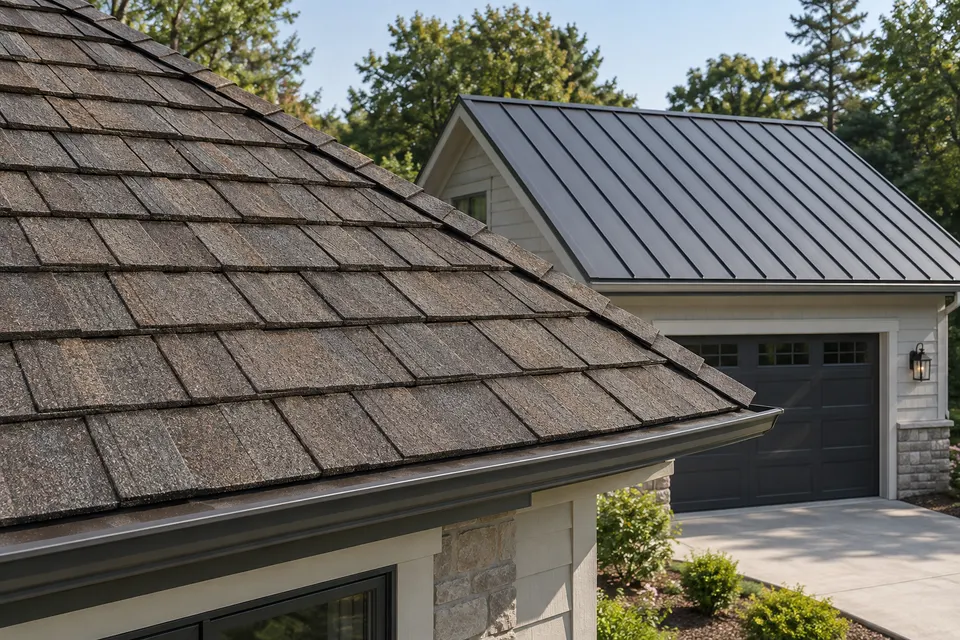
Metal shingles usually cost a little less and look like a traditional roof; standing seam costs a little more, looks modern and works on flatter roofs. HomeGuide prices metal shingles at $6 to $14 per square foot installed and standing seam at $9 to $16. The pitch of your roof can settle the question before looks or price do: the model residential code does not allow metal shingles below a slope of 3 in 12, while standing seam systems can go as low as ¼ in 12. Both last far longer than asphalt, and both depend on a crew that has installed that exact product.
What metal shingles and standing seam are
Metal shingles are pieces of steel or aluminum stamped into the shape of a traditional roofing unit and locked to the pieces around them. HomeGuide says steel and aluminum are the most common metals, with copper, tin and zinc also sold. The Department of Energy's Building America Solution Center describes styles made to look like wood shakes and like concrete or clay tile, and others copy slate or asphalt shingles. InterNACHI, the home inspectors' association, says a metal shingle is roughly the size of an asphalt strip shingle, several times wider than it is tall. They are fixed to a solid, closely fitted roof deck.
Stone-coated steel is a kind of metal shingle. HomeGuide describes it as a steel core with corrosion-resistant coatings and a layer of stone granules on top, stamped to look like shingles, shake or tile. The granules give it the texture of a conventional roof instead of the sheen of painted metal. It is often laid on wooden battens rather than straight on the deck, which HomeGuide says costs more but leaves an air space that helps with ventilation and heat; nailing straight to the deck is more common where high wind is the main concern.
Standing seam is a roof of long, flat metal panels, typically running in one piece from ridge to eave and joined at raised seams over hidden clips. Our guide to standing seam and exposed-fastener metal roofs explains how the panels are attached and the difference between snap-lock and mechanically seamed panels, so this page does not repeat it.
Cost side by side
| Metal shingles | Stone-coated steel | Standing seam | |
|---|---|---|---|
| HomeGuide, installed per square foot (November 2025) | $6 to $14 | $7 to $13 | $9 to $16 |
| HomeGuide, typical total installed | $9,000 to $35,000 | $12,200 to $25,900 | $13,500 to $40,000 |
| HomeAdvisor, per square foot (June 2026) | $7 to $22 | not given separately | $7 to $30 |
| Angi, per square foot (August 2026) | $6 to $22 | not given separately | $8 to $30 |
HomeGuide prices stone-coated steel at $700 to $1,300 per square (100 square feet) installed, which is $7 to $13 per square foot; its stone-coated page, last updated in April 2023, gives the same range and puts a typical job at about $19,500. HomeGuide prices metal shingles made to look like slate at $600 to $1,400 per square installed. The totals depend on the roof size each source assumes, so compare per square foot, not per job.
In HomeGuide's ranges, standing seam costs about $2 to $3 more per square foot than metal shingles (our subtraction). HomeAdvisor and Angi show much wider ranges for both, with standing seam reaching higher. The three sources agree on the order: metal shingles tend to be the cheaper of the two, though not by much, and the metal, its thickness and the shape of your roof can move either one across most of its range.
Where the money goes:
- Labor. HomeGuide says standing seam takes more time and skill to install, and puts labor for stone-coated steel at $3.50 to $7 per square foot. Angi also says metal shingles are the easier of the two to install.
- Style. HomeGuide says stone-coated tile profiles cost more than shingle and shake profiles.
- Battens. Stone-coated steel laid on battens costs more than a roof nailed straight to the deck.
- Tear-off and decking. HomeGuide puts removing the old roof at $1 to $3 or more per square foot. Our guide to what a metal roof costs covers the other line items, and the roof cost calculator prices your roof by the square.
Looks and roof shape
This is often the deciding factor. Angi describes metal shingles as a traditional look that fits most neighborhoods and standing seam as a sleek, modern style that some homeowners' associations do not allow. If you have an association, read its rules on roofing before you choose, and ask for approval in writing.
- Metal shingles can pass for asphalt, slate, shake or tile from the street. Stone-coated steel has a matte, granular surface; plain stamped metal shingles have a painted finish.
- Standing seam shows long vertical lines and a smooth, flat surface between them. HomeGuide says wide, flat panels can show oil canning, a waviness in the flat of the metal that is cosmetic; striated or ribbed panels and lighter colors make it less visible.
Standing seam panels are made to length, often on site with a roll-forming machine, which HomeGuide says suits large or complex roofs. HomeGuide also lists more trim as a drawback of standing seam.
Lifespan and warranties
| Source | Metal shingles | Standing seam |
|---|---|---|
| HomeGuide, April 2023 | 40 to 70 years for stone-coated steel | 30 to 50 years or more |
| HomeGuide, November 2025 | 30 to 80 years or more for metal roofs generally | longer than corrugated metal in humid climates |
| Angi, August 2026 | at least twice as long as a traditional roof | more than 50 years in ideal conditions |
| Metal Roofing Alliance | 30 to 50 years or more for metal roofs generally |
No source we read today gives a clear lifespan edge to either one; the metal, the finish and the installation matter more than the style. Our guide to standing seam and exposed-fastener metal roofs gives further standing seam figures from HomeAdvisor and Angi, and how long a roof lasts compares every material.
Warranties for both come in the same general shape, though the terms depend on the product:
- Length. The Metal Roofing Alliance, the industry's trade group, says most metal roofs come with a warranty of 30 to 50 years. HomeGuide says many standing seam roofs carry a 50-year warranty, and that many stone-coated steel makers offer a 50-year transferable warranty.
- What it covers. For standing seam, HomeGuide says the paint finish (a PVDF coating) is typically warranted for at least 30 years. For stone-coated steel, HomeGuide says the leading makers' 50-year limited warranties cover wind up to 120 mph and hail up to 2.5 inches across. Some warranties cover the finish only; others cover leaks. Ask which.
- What voids it. HomeGuide says walking on stone-coated panels can dent them and void the warranty, painting a stone-coated roof may void it, and installing standing seam over old shingles may void the new roof's warranty.
- Workmanship. A manufacturer's warranty covers the product. Ask the contractor for a separate warranty on the installation, in writing.
Our guide to what a roof warranty covers explains prorating, transfers and workmanship coverage in more detail. This is general information, not legal advice; the warranty document itself decides what is covered.
Hail, wind and noise
Hail. Impact ratings belong to products, not styles. Under UL 2218, Class 4 is the top rating. HomeGuide says stone-coated steel carries a Class 4 rating, and the Building America Solution Center notes that the IBHS FORTIFIED hail standard requires metal roof panels to be UL 2218 Class 4. Denting is a separate question from leaking. InterNACHI says hail can dent and distort metal shingles badly enough that their interlocking seams leak or lose wind resistance, because a metal shingle rests mainly on its edges with little support beneath. HomeGuide lists denting in hailstorms among standing seam's drawbacks too, but its repair page says hail damage to metal roofs is cosmetic in most cases. Our guide to hail damage explains how inspectors and insurers tell cosmetic from functional damage, and impact-resistant shingles explains the test classes.
Wind. The Metal Roofing Alliance says metal roofing carries a 140 mph wind rating. InterNACHI says metal shingles have a low profile and generally do well in wind. For standing seam, the rating depends on the clips and their spacing, which our standing seam guide covers. Whichever you choose, ask for the tested wind rating of the exact product and fastening pattern.
Noise. Sources disagree slightly. Angi says rain and hail on metal shingles may sound noisy. HomeGuide says stone-coated steel is not noisy when installed correctly, because the deck, insulation, underlayment and the granule coating dampen the sound, and batten installation adds more space; it adds that a home with no attic may need a sound-dampening underlayment. HomeAdvisor says a properly insulated and installed metal roof should sound much like asphalt in rain. If noise matters, ask what goes under the metal.
Walking, upkeep and repairs
Walking on the roof matters for chimney sweeps, satellite installers, gutter cleaners and future repairs.
- Metal shingles. InterNACHI tells inspectors not to walk on formed metal shingles at all, because they are usually light-gauge metal and bend underfoot; a footstep tends to bend a whole shingle. HomeGuide says the same about stone-coated steel, where a dent can also void the warranty. Ask for the manufacturer's instructions on walking on the exact product before anyone goes up.
- Standing seam. HomeGuide says standing seam is safe to walk on when it is dry and not too steep.
Repairs. One metal shingle maker's technical bulletin describes two ways to fix a damaged shingle: unlock the neighboring pieces, remove the damaged one and lock a new one in; or fit a replacement over the damaged piece and bond it with sealant. It notes that a new piece may not match the weathered ones around it. Because a standing seam panel runs the full length of the roof, a damaged panel is a larger piece to replace; HomeGuide lists costly or difficult repairs among standing seam's drawbacks. HomeGuide prices replacing metal roof panels at $3 to $14 per square foot and a typical metal roof repair at $300 to $1,500.
Upkeep. Angi says both need little maintenance when properly installed, but names a weak point for each: metal shingle interlocks can come loose, and standing seam must be able to expand and contract without opening gaps. HomeGuide adds that stone-coated steel can lose granules over time and grow algae in humid climates.
Low and steep roofs, and roofing over shingles
Pitch. The Building America Solution Center says the International Residential Code does not permit metal shingles below 3 in 12, and sets ¼ in 12 as the minimum for standing seam systems. Manufacturers set their own minimums, often higher: HomeGuide says snap-lock standing seam usually needs 2 in 12 to 3 in 12, depending on the brand, while mechanically seamed panels go lower. So:
- Below 3 in 12, standing seam, usually mechanically seamed, is the metal option. Metal shingles are not.
- At 3 in 12 and steeper, both work, and looks, budget and the installer decide. HomeGuide notes that roofs steeper than 6 in 12 cost more for either, because of the safety equipment and slower work.
Over existing shingles. The International Residential Code's reroofing section (R908) allows a new covering over an old one in some cases. It names standing seam as an example of a complete, separate roofing system that carries its loads to the building's structure without relying on the old roof, which does not require the old covering to be removed. It also allows metal panels and metal shingles over old wood shakes when the shake roof is covered with an approved fire-resistant layer first. It does not allow a recover over a roof that is water-soaked or badly deteriorated, over slate or tile, or over a roof that already has two or more layers.
Allowed is not the same as advisable. HomeAdvisor calls going over old shingles with metal rarely wise, because it traps asphalt under the metal where moisture can collect. HomeGuide says most experts recommend removing the old roof; it lists the loss of a deck inspection, trapped moisture, more oil canning, and a possibly voided warranty as the costs of a standing seam roof-over, and says most roofers also recommend tear-off for stone-coated steel. Building codes are adopted and amended locally, so check your state's rules and your local code. Our guide to roofing over existing shingles covers the trade-offs, and roof decking and underlayment explains what a tear-off lets the roofer see.
What to ask before you sign
- Which product exactly: stamped steel or aluminum shingles, stone-coated steel, snap-lock or mechanically seamed standing seam, with the maker and profile.
- The metal, its gauge, and the finish or coating.
- The minimum pitch the manufacturer allows for that product, and your roof's pitch.
- The UL 2218 impact class and the tested wind rating of that product and fastening pattern.
- For stone-coated steel: battens or direct to deck, and why.
- Tear-off or roof-over, what your local code allows, and whether a roof-over affects the warranty.
- The underlayment, and what goes under the metal to control noise.
- How the roof should be walked on, and whether matching replacement pieces will be available.
- The manufacturer's warranty, whether it covers the finish, leaks, wind or hail, whether it transfers, and the contractor's own warranty on labor, in writing.
- How many roofs of this exact kind the crew has installed.
Before you sign, check the contractor as well as the estimate: see what to check before you hire a home improvement contractor and our list of questions to ask a roofer. If you are still deciding between metal and asphalt, start with whether a metal roof is worth it over shingles.
Frequently asked questions
Are metal shingles cheaper than standing seam?
Usually a little. HomeGuide prices metal shingles at $6 to $14 per square foot installed and standing seam at $9 to $16. HomeAdvisor and Angi also put standing seam's upper end higher. The metal and your roof's shape can outweigh the difference.
Can metal shingles go on a low-slope roof?
No, not below 3 in 12 under the model residential code, as the Building America Solution Center summarizes it. On a flatter roof, standing seam is the metal option; check the manufacturer's minimum for the exact panel.
Is stone-coated steel the same as metal shingles?
It is one kind. Stone-coated steel is a stamped steel shingle, shake or tile with a layer of stone granules bonded on top, which gives it a matte, textured surface. Plain metal shingles have a painted finish instead.
Which handles hail better?
It depends on the product, not the style. Ask for the UL 2218 class of the exact product. InterNACHI notes that metal shingles, which rest mostly on their edges, can dent more readily than panels fully supported by the deck.
Can I walk on a metal shingle roof?
Walking on it can dent it. InterNACHI advises inspectors not to walk on formed metal shingles, and HomeGuide says a dented stone-coated panel can void its warranty. Standing seam is walkable when dry and not too steep, according to HomeGuide.
How we got these numbers
HomeAnvil does not yet publish price data of its own. Every figure on this page comes from a published source, read on September 27, 2026:
- HomeGuide, metal roof cost, updated November 21, 2025: installed prices per square foot for metal shingles, stone-coated steel and standing seam, metal slate shingles, the metals used for shingles, lifespan, tear-off and pitch. HomeGuide says it tracks the estimates homeowners receive from contractors.
- HomeGuide, stone-coated steel roofing cost, updated April 5, 2023: prices, labor, battens, styles, warranties, impact rating, lifespan, noise, walking and roof-overs. This page is older than the others.
- HomeGuide, standing seam metal roof cost, updated April 5, 2023: oil canning, trim, roll-forming, lifespan, finish warranties, minimum slopes, walking and roof-overs.
- HomeGuide, metal roof repair cost, updated February 4, 2026: repair and panel replacement costs, and hail damage.
- HomeAdvisor, metal roof cost, updated June 19, 2026: prices per square foot, noise, hail and installing over shingles. HomeAdvisor says its figures come from surveying its customers, combined with other published research.
- Angi, metal shingles vs. standing seam, updated August 3, 2026: prices, looks, homeowners' associations, lifespan, noise, installation and upkeep.
- U.S. Department of Energy, Building America Solution Center, metal roofs: metal shingle styles and deck, the code minimum slopes, and the FORTIFIED hail requirement.
- International Residential Code, section R908, reroofing, in the International Code Council's code text, read in a local building department's published copy of a state residential code based on the IRC: the roof recover provisions and their exceptions. Codes are adopted, and often amended, place by place.
- InterNACHI, Mastering Roof Inspections: Metal Roofs, part 9 and part 10: metal shingle size and support, walking, hail and wind.
- Metal Roofing Alliance, frequently asked questions: lifespan, warranty length, wind rating, noise and installing over an existing roof.
- Classic Metal Roofs, damaged metal shingles, a manufacturer's technical bulletin with no date shown: how a damaged metal shingle is replaced or capped.
- The per-square-foot figures converted from per-square prices, and the price difference between the two styles, are our own arithmetic.
We will update this page when these sources publish new figures, and the date above will say when.
Related guides
 Standing seam vs exposed-fastener metal roofsStanding seam costs $9 to $16 per square foot installed against $5 to $12 for exposed-fastener panels. It hides its screws, needs less upkeep and lasts longer.
 How much does a metal roof cost?A metal roof typically costs $6,045 to $18,341 installed, or $5 to $16 per square foot. Prices by metal and panel type, repair costs and lifespan.
 Is a metal roof worth it over asphalt shingles?A standing-seam metal roof costs about 1.6 times as much as asphalt shingles ($51,865 against $31,871) but is rated to last 40 to 80 years instead of 20 to 30.
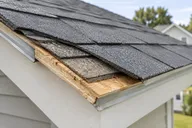 Can you put new shingles over old ones?Often yes, once: the building code bars a layover on a roof with two or more layers. What a roof-over saves, what it adds in weight, and what it hides.
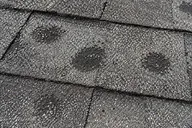 How do you know if hail damaged your roof?Quarter-size (1 inch) hail can start to damage older 3-tab shingles, laminated ones at 1.25 inches. How to spot real damage and when to call your insurer.
 What does a roof warranty actually cover?A shingle warranty covers manufacturing defects, a contractor's warranty covers installation. How prorating, wind, algae, transfers and voiding work.