
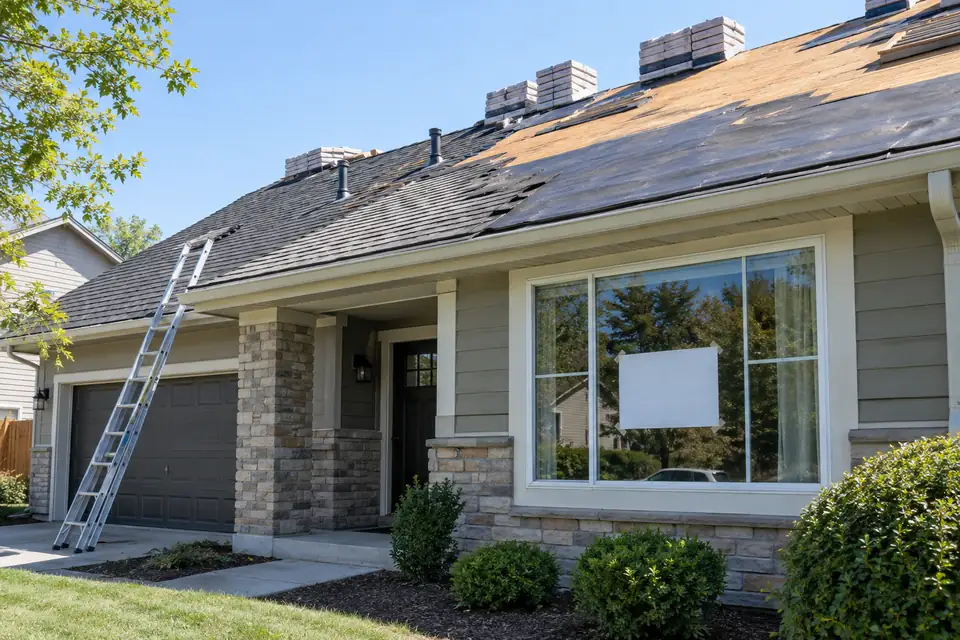
In most places, yes. The model building code for homes requires a permit before anyone repairs or alters a house, and it does not list a new roof among the jobs that are exempt. Your local building department decides, though, because codes are adopted and amended place by place. Published national figures put a roofing permit at $100 to $500 in most cases, and HomeAdvisor reports fees as high as $1,400. The roofer should apply for it, and the building department inspects the finished roof.
This page explains how permits usually work. It is not legal or insurance advice; your building department, your contract and your policy decide what applies to you.
What the building code says
The International Residential Code, published by the International Code Council, is the model code for one- and two-family homes. A city or county adopts an edition of it, often with changes of its own.
- A permit comes first. Section R105.1 says that an owner, or someone the owner authorizes, who intends to alter or repair a building must apply to the building official and get the permit before the work starts.
- The exemptions are short. The 2015 edition's list of building work that needs no permit covers things like small sheds, low fences, sidewalks and painting. A reroof is not on it.
- Local rules differ. HomeGuide notes that some cities exempt reroofing or small replacements, and describes permits as commonly needed once a repair goes past one square (100 square feet) or 25% of the roof, for structural work, for a full replacement, or in a historic district. Check your local building department's rules, or ask your roofer to show you what they found.
A permit can also carry limits of its own. A homeowner's re-roofing guide published by SAFEbuilt, a building department services company, states that a roof may carry no more than two layers when the work is done, and lists the cases where the old roof must come off down to the deck. Our guide to putting new shingles over old ones covers those rules in full.
What a roofing permit costs
| Source | What it gives | Range |
|---|---|---|
| HomeAdvisor, updated June 17, 2026 | Permit for a roof replacement | $100 to $1,400, depending on your area and the project |
| Fixr, updated February 4, 2026 | Permit for a roof replacement | $100 to $500 |
| HomeGuide, updated January 12, 2024 | Permit for a roof replacement | $150 to $500 |
| HomeGuide, updated January 12, 2024 | Permit for a roof repair, where one is needed | $70 to $250 |
The three agree on the low end and differ on the top; HomeAdvisor says the fee depends on your area and the project. Your local building department sets the fee, so ask it or your roofer for the figure that applies to you.
You don't normally pay it separately. HomeGuide says contractors typically include the permit fee in their estimate. Look for it as a line on each estimate, so you can see that it is there and compare like with like.
Who pulls the permit
The roofer, in almost every case. The Federal Trade Commission lists a contractor who asks you to get the required building permits as a sign of a home improvement scam. SAFEbuilt's guide gives the same advice: have the contractor apply for the required permits.
A homeowner can usually apply too. HomeGuide notes that a homeowner who pulls an owner-builder permit takes on the code responsibility, the financial liability and the insurance risk for the project. That makes sense if you are doing the work yourself. If you are paying a roofer, the permit belongs in the roofer's name, because the inspection is checking the roofer's work.
Put it in writing. The contract should say who applies for the permit, who pays the fee and who schedules the inspections. Our list of questions to ask a roofer covers the rest of the contract.
What gets inspected
Where a permit is issued, a building inspector looks at the roof against the code. SAFEbuilt's guide says the permit holder must call for a final roof inspection and that some jobs may need an inspection partway through, so ask your building department which ones apply when the permit is issued.
The same guide gives an idea of what an inspector is looking at on a shingle reroof:
- The deck. Warped, cracked or delaminated boards replaced, so the shingles sit on a rigid surface.
- Underlayment. The right type and overlap for the slope of the roof, and an ice barrier where your local code calls for one.
- Fasteners. Nails long enough to reach into the deck and driven flush, not over- or under-driven.
- Edges and flashing. Drip edge around the perimeter, step flashing where the roof meets a wall, and flashing raised and resealed around vents and pipes.
- Layers. No more coverings on the roof than the code allows.
Most of these are covered by the next layer of the roof once it goes on, so photos of each stage are worth asking for. Our guide to what happens during a roof replacement walks through the stages in order.
The last payment and the final inspection
SAFEbuilt advises not making the final payment until you have received a certificate of completion or the final inspection has passed. The FTC gives similar advice for any home improvement job: never make the final payment until the work is done and you are satisfied with it. Tie the last payment to the passed inspection in your contract.
Keep the permit, the inspection sign-off, the contract and the warranty papers together. The permit record shows when your roof was replaced, which you may need later.
What can go wrong if you skip it
- Fines and rework. HomeGuide says building without a permit can lead to fines, the project being shut down or having to tear out the work, and that applying after the fact may cost two to three times the usual fee. It puts after-the-fact permits for building work in general at $2,000 to $8,000; that figure is not specific to roofs.
- Covered-up work. A permit applied for after the roof is finished can only inspect what is still visible. The deck, underlayment and fasteners are underneath the shingles.
- Selling the house. HomeGuide says unpermitted work can interfere with a future sale, and that a home with unpermitted work can be sold as is with full disclosure.
- Insurance. The Insurance Information Institute says a standard homeowners policy (the HO-3) excludes the extra cost of meeting building codes when you rebuild, unless you buy an ordinance or law endorsement. It also advises making sure contractors get the proper building permits, and warns that you may not be fully covered if you make significant improvements without telling your insurer. Ask your agent how your policy treats a new roof, and tell them when it is done.
The Insurance Information Institute also says most insurers require an inspection before covering a home whose roof is more than 20 years old. A permit record can help show how old your roof really is. For a roof damaged in a storm, see our guide to roof insurance claims.
Frequently asked questions
Do I need a permit to repair a few shingles?
Often not, but it depends on your local rules. HomeGuide describes permits for repairs as commonly needed only once the repair goes past one square (100 square feet) or 25% of the roof, and puts a repair permit, where one is needed, at $70 to $250. Ask your building department or your roofer.
How much does a roofing permit cost?
HomeAdvisor gives $100 to $1,400 for a roof replacement permit, Fixr $100 to $500 and HomeGuide $150 to $500. Your building department sets the fee, and it is usually included in the roofer's estimate.
Should I or the roofer get the permit?
The roofer. The FTC lists a contractor who asks you to get the permits as a warning sign. The contract should name who applies, who pays and who schedules the inspections.
Does a roof-over need a permit too?
Where your local code requires a permit for a reroof, a layover is still a reroof. The code also limits how many layers a roof may carry, which is one of the things an inspector checks. See our guide to putting new shingles over old ones.
What if my roof was replaced without a permit?
Call your local building department and ask what it would take to permit it now. HomeGuide says after-the-fact permits for building work generally take longer and cost more, and that some places work with homeowners to bring a property into compliance. Before you hire anyone again, see what to check before you hire a contractor.
How we got these numbers
HomeAnvil does not yet publish price data of its own. Every figure and rule on this page comes from a published source, read on September 26, 2026:
- HomeAdvisor, roof replacement cost, updated June 17, 2026: the permit fee range for a roof replacement and the note that some rules require roof inspections.
- Fixr, roof replacement cost, updated February 4, 2026: the permit fee range for a roof replacement.
- HomeGuide, building permit cost, updated January 12, 2024: roofing permit fees for replacements and repairs, when a roofing permit is commonly needed, who can apply, owner-builder permits, after-the-fact permits and the effects of building without a permit.
- International Code Council, 2015 International Residential Code, Sections R105.1 and R105.2, read in a copy of Section R105 published by a local building department (its handwritten notes are local changes and were not used).
- SAFEbuilt, homeowner guide to residential re-roofing under the 2024 IRC, dated January 1, 2026, as published by a local building department: inspections, the layer limit, what the checklist covers and the payment advice. Some of its requirements are local, and only general points were used.
- Federal Trade Commission, how to avoid a home improvement scam, July 2022: permits as a warning sign and the final payment.
- Insurance Information Institute, am I covered? on ordinance or law coverage; settling insurance claims after a disaster on building permits and telling your insurer about improvements; and how your roof influences your insurance on inspections of roofs over 20 years old.
Permit rules and fees are set locally and change. We will update this page when these sources change, and the date above will say when.
Related guides
 What questions should you ask a roofer before you sign?The roofing questions to ask before you sign: tear-off, decking, ice barrier, ventilation, permit, crew, cleanup, payment and warranty papers, plus red flags.
 What happens during a roof replacement, step by step?An asphalt shingle roof usually goes on in one to three days. What happens before, during and after, from tear-off and deck repair to flashing and cleanup.
 Can you put new shingles over old ones?Often yes, once: the building code bars a layover on a roof with two or more layers. What a roof-over saves, what it adds in weight, and what it hides.
 How much does a roof replacement cost?A roof replacement typically costs $5,900 to $13,400, or $400 to $1,100 per square installed. How to measure your roof, what moves the price and how to compare estimates.
 How does a roof insurance claim work after a storm?Insurance usually pays for sudden wind or hail damage, not wear. Wind/hail deductibles often run 1% to 5% of your home's insured value. How a claim works.
 What to check before you hire a contractorFive things to ask for before you sign with a roofing, siding, window, bath or HVAC contractor, wherever you live in the United States.