
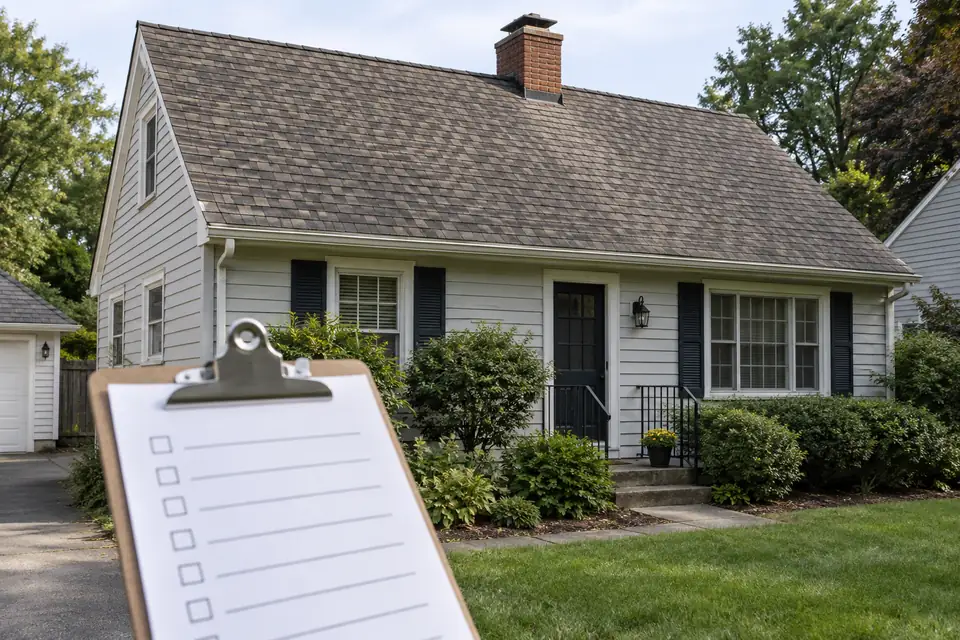
The older your roof, the harder it can be to insure and the less a claim may pay. Triple-I, the insurance industry's information group, says most insurers require a roof more than 20 years old to pass an inspection before they will write a policy, and some decline older roofs or cover them only at actual cash value, which subtracts depreciation from what they pay. A new roof, or one built to resist storms, can work the other way. Insurers set their own rules and each state regulates them, so read your policy, check your state's rules and ask your agent. This page is general information, not insurance advice.
Why insurers care how old your roof is
A roof is the part of the house that takes the weather. IBHS, the Insurance Institute for Business & Home Safety, estimates that roof-related damage accounts for 70 to 90 percent of insured losses to homes in catastrophes. Triple-I lists age, condition, material and shape as the things insurers weigh when they assess a roof.
Age matters because a roof wears out and because older roofs fare worse in storms. SageSure, an insurance company, notes that older roofs are more prone to damage from storms and hail. Our guide to how long a roof lasts covers lifespans by material, and our roof insurance claim guide describes the IBHS research on how shingles lose hail resistance with age.
The age cutoffs insurers use
There is no single national cutoff. Each insurer sets its own, and the same insurer may treat a new policy differently from a renewal.
| What an insurer may do | When it tends to apply | Source |
|---|---|---|
| Require an inspection before writing a new policy | Roof more than 20 years old | Triple-I |
| Decline to write a new policy | Older roofs, at some insurers | Triple-I; Insurance.com |
| Require an inspection before renewing | Roofs from about 15 to 20 years old and up | Insurance.com; SageSure |
| Refuse to renew unless the roof passes an inspection | Roofs over 20 years old, at some insurers | Insurance.com |
| Cover the roof only at actual cash value | Older roofs, at some insurers | Triple-I; Insurance.com |
The practical question is what your own insurer does, and at what age. Ask before your roof reaches the next birthday that matters, not after a renewal notice arrives.
Actual cash value and replacement cost on an older roof
A policy settles a roof claim in one of two ways.
- Replacement cost pays to repair or replace the roof without subtracting depreciation.
- Actual cash value pays what the roof was worth when it was damaged. Triple-I defines depreciation as the loss of value from age, obsolescence, wear and tear and other factors.
The NAIC, the association of state insurance regulators, gives an example of two households with the same $15,000 of roof damage and a $1,000 deductible. With replacement cost, one receives $14,000. With actual cash value, the other has $10,000 taken off for depreciation and receives $4,000.
SageSure says most policies cover a new roof at replacement cost for a period, and that this may change as the roof ages. United Policyholders, a nonprofit for policyholders, described the trend of offering actual cash value on the roof alone while the rest of the house keeps replacement cost. That change can sit in an added endorsement rather than the main policy form, so read every page that mentions the roof.
How depreciation shrinks a roof payment
SageSure describes a simple way to estimate actual cash value: divide the cost of a new roof by its expected life to get a yearly amount, multiply by the roof's age, and subtract that from the cost of a new roof. Its example is a $20,000 roof with a 20-year life that is 15 years old, which leaves about $5,000 before the deductible.
| Roof age | Depreciation taken off | Actual cash value, before the deductible | Replacement cost, before the deductible |
|---|---|---|---|
| 5 years | $5,000 | $15,000 | $20,000 |
| 10 years | $10,000 | $10,000 | $20,000 |
| 15 years | $15,000 | $5,000 | $20,000 |
| 20 years | $20,000 | $0 | $20,000 |
The rows other than 15 years are our own arithmetic on SageSure's method and example. Insurers calculate depreciation in their own ways, often looking at condition as well as age, so treat the table as a picture of the trend, not a forecast of your payment. SageSure also notes that when an insurer first pays actual cash value, you can often recover the depreciation by sending proof that the roof was repaired or replaced. Ask whether your policy allows that for the roof.
Roof payment schedules
Some insurers use a roof payment schedule, also described as a loss settlement schedule, instead of working out depreciation claim by claim. United Policyholders described one insurer's schedule in 2014: the policyholder received it up front, it set out what the roof would be worth based on its age and type, and it applied only to wind and hail losses, so a roof damaged by fire was still paid at full replacement cost.
United Policyholders worked through an example of what that kind of settlement can mean: a $20,000 roof that is 10 years old, losing $1,000 a year in value, with a $1,000 deductible leaves the owner paying $11,000, against $1,000 with full replacement cost. If your policy has a schedule, find it and work out what it would pay for your roof, at its age and type, if the roof were destroyed today.
Inspections at renewal
Insurers increasingly check older roofs before renewing. Insurance.com reports that the trend is to require roofs of about 15 to 20 years and older to be inspected for renewal, that some insurers make the homeowner pay for the inspection, and that a roof that fails may mean the policy is not renewed unless the roof is replaced. SageSure says many insurers inspect a roof before renewing a policy or issuing a new one.
If your insurer asks for an inspection:
- Ask what it must show and by what date, in writing.
- Ask who may do it, and whether the insurer accepts a report from a roofer you hire.
- Fix what is fixable first. Missing shingles, lifted flashing and worn pipe boots are repairs; our guide to what a roof inspection costs explains what an inspection covers.
- Read every renewal notice. United Policyholders warned that owners who miss a change to roof coverage on a renewal notice can be left with a large repair bill.
State rules on notice periods and nonrenewal differ, so check your state's rules or ask your state insurance department if you think a notice came too late.
Discounts for a new or stronger roof
A new roof resets the age an insurer sees. Tell your insurer when it is finished and ask what proof of the date it wants, such as the permit or the contractor's invoice.
A roof built to resist storms can also lower the premium. Triple-I lists reinforcing your roof and buying stronger roofing materials among the ways to reduce what you pay. FORTIFIED, the IBHS construction program, says insurers offer premium discounts for homes that earn its designation, which an independent evaluator verifies against the FORTIFIED standard. Impact-rated shingles are one kind of stronger roofing material; our guide to hail damage explains what impact ratings mean.
Discounts vary by insurer and by state. Before you pay extra for a rated roof, ask your insurer what discount it would give, what proof it needs, and whether the discount applies to your whole premium or only part of it.
What to do before your roof is the problem
- Find your roof's age. Look for the permit, the contractor's invoice or the warranty registration. The date on your policy should match.
- Read the roof parts of your policy: the settlement method, any roof endorsement, any payment schedule and the wind and hail deductible.
- Ask your agent three questions: at what roof age does coverage change, what inspection will be required at renewal, and what discount a new or stronger roof would earn.
- Plan the replacement before the age limit arrives. Our guide to the signs you need a new roof helps you judge how much life is left.
- Keep the paperwork for the new roof, including the product names and any impact or wind rating, and send copies to your insurer. The roofing warranties guide covers the warranty papers to keep.
Frequently asked questions
Will my insurer cancel my policy because my roof is old?
It may decline to renew it. Some insurers refuse to renew a home with a roof over 20 years old unless it passes an inspection, according to Insurance.com. Your renewal notice and your state's rules govern how and when that can happen.
Does a new roof lower my homeowners insurance?
It can. A new roof removes the age problem, and a roof built to a stronger standard may earn a discount. How much depends on your insurer and your state, so ask for the figure before you choose materials.
What is the difference between a roof payment schedule and actual cash value?
Both pay less as a roof ages. Actual cash value works out depreciation when the claim is made. A payment schedule sets out in advance, in your policy, what the roof is worth at each age for its type.
Can I switch my roof back to replacement cost coverage?
Sometimes. Ask your agent whether a newer roof, a passed inspection or a different policy form would restore replacement cost on the roof, and what it would cost.
Does an old roof affect a claim for storm damage?
Yes. Age can decide whether the roof is paid at replacement cost or depreciated value, and wear from age is not covered at all. Our roof insurance claim guide walks through a claim step by step.
Where this information comes from
Every source was read on September 26, 2026:
- Triple-I, how your roof influences your home and business insurance: the 20-year inspection threshold, declined policies, actual cash value on older roofs, and the factors insurers weigh. The page carries no date.
- Triple-I, how is the settlement amount determined: the definition of depreciation and the two settlement methods. The page carries no date.
- Triple-I, 12 ways to lower your homeowners insurance costs: reinforcing the roof and stronger roofing materials. The page carries no date.
- NAIC, know the difference between replacement cost and actual cash value, July 22, 2021: the $15,000 roof example.
- IBHS, roof research: roof damage as 70 to 90 percent of insured residential catastrophe losses.
- FORTIFIED, the IBHS program, home page: insurer discounts for FORTIFIED homes and verification by an independent evaluator.
- SageSure, roof replacement cost vs actual cash value, October 4, 2024: the depreciation method, the $20,000 example and recoverable depreciation.
- SageSure, will insurance cover a 20-year-old roof, January 24, 2025: coverage changes at 15 to 20 years, inspections before renewal, replacement cost on new roofs.
- Insurance.com, will insurance cover a 20-year-old roof, June 19, 2026: renewal inspections, who pays for them, nonrenewal and actual cash value on older roofs.
- United Policyholders, roof insurance: ACV versus replacement cost, January 28, 2014, first published by Bankrate: roof payment schedules, the $20,000 example and renewal notices. This is the oldest source here; schedules and their terms may have changed since.
The depreciation table is our own arithmetic on SageSure's published method. HomeAnvil does not sell insurance and does not publish data of its own on premiums or claims.
Related guides
 How does a roof insurance claim work after a storm?Insurance usually pays for sudden wind or hail damage, not wear. Wind/hail deductibles often run 1% to 5% of your home's insured value. How a claim works.
 How long does a roof last?Architectural shingles last about 30 years, 3-tab about 20, metal 40 to 80, slate 60 to 150. What shortens a roof's life, and why a warranty isn't a lifespan.
 How do you know if hail damaged your roof?Quarter-size (1 inch) hail can start to damage older 3-tab shingles, laminated ones at 1.25 inches. How to spot real damage and when to call your insurer.
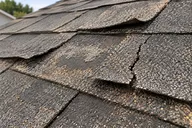 What are the signs you need a new roof?The signs a roof needs replacing, outside and in: age past 20 to 30 years for shingles, bald or curling shingles, repeat leaks, a sagging line. What each means.
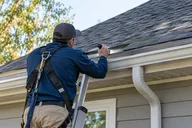 How much does a roof inspection cost?A roof inspection typically costs $125 to $383, about $252 on average. Drone inspections run $150 to $400 and infrared $400 to $600. What each one checks.
 What does a roof warranty actually cover?A shingle warranty covers manufacturing defects, a contractor's warranty covers installation. How prorating, wind, algae, transfers and voiding work.