
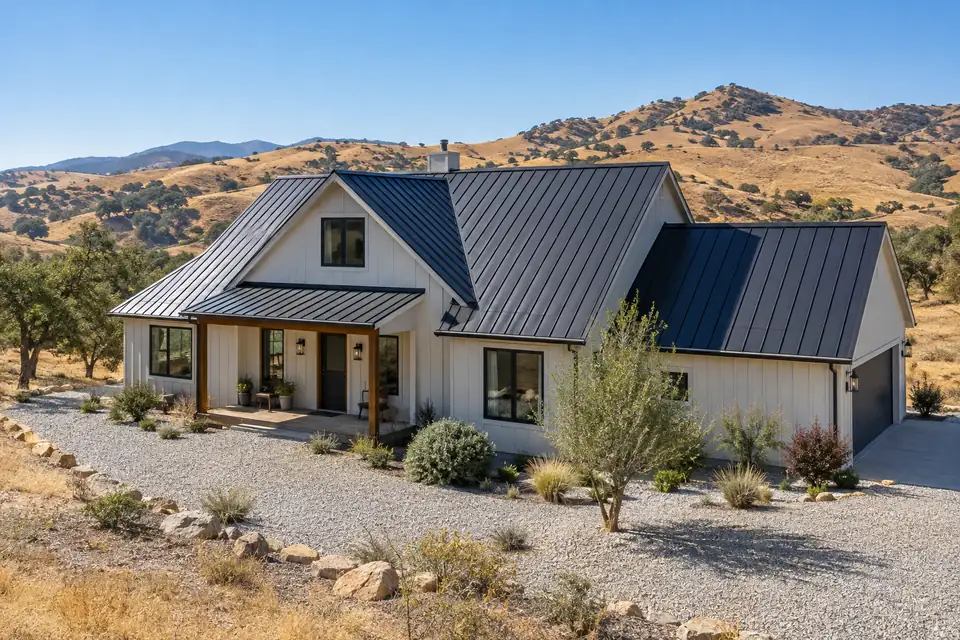
A fire-resistant roof is one rated Class A, the top result in the standard fire test for roofs, ASTM E108, which UL publishes as UL 790. Class A is within reach of most homes: fiberglass asphalt shingles, clay and concrete tile, slate and metal are all listed as Class A roof coverings by the wildfire program of IBHS, the Insurance Institute for Business & Home Safety. Untreated wood shakes are the main exception. The rating is only part of the story. IBHS and NFPA both say that in a wildfire most homes catch from wind-blown embers, which lodge in debris on the roof, in gutters and through vents, so a Class A roof works best when those weak points are dealt with too.
What the fire classes mean
ASTM E108 and UL 790 use the same test methods, according to a 2014 article in Fire Engineering by a retired deputy fire chief. The tests look at three things: whether fire spreads across the roof surface, whether flames get through the covering into the deck and attic, and whether the covering itself throws off burning pieces. The standard's sections include a spread-of-flame test, an intermittent-flame test and a burning-brand test, in which a burning block of wood is set on the roof while a fan blows air up the slope.
| Class | Fire exposure it resists | Burning brand used in the test |
|---|---|---|
| A | severe | 12 by 12 by 2.25 inches, 4.4 pounds |
| B | moderate | 6 by 6 by 2.25 inches, 1.1 pounds |
| C | light | 1.5 by 1.5 by about 0.8 inches, 3.26 ounces |
| Unrated | failed or never tested | none passed |
Class B and C roofs are allowed to let flame spread farther than Class A. The Fire Engineering article notes that the Class A and B brands are larger than the ones wildfires usually carry. That does not make the test a guarantee. FEMA says the test conditions do not replicate an actual wildfire, and that real exposures are often much more severe.
Covering or assembly
A fire class belongs to a roof assembly, not only to the top layer. FEMA defines the assembly as the deck, any insulation and cover boards, the underlayment and the roof covering together.
Some coverings rate Class A on their own. Others are Class A only "by assembly", which means extra fire-resistant material has to go between the covering and the deck to reach that rating. The IBHS fact sheet published through NFPA's Firewise program gives aluminum, recycled plastic and rubber, and some fire-retardant wood shakes as examples of by-assembly coverings. If your roofer offers a by-assembly product, ask what goes under it and make sure that layer appears on the estimate.
Which roofing materials rate Class A
| Material | Fire rating | What to know |
|---|---|---|
| Fiberglass asphalt shingles | Class A | Most common Class A covering; the asphalt still burns, and FEMA suggests a fire-rated gypsum roof board over the deck in wildfire zones |
| Clay and concrete tile | Class A | Noncombustible, but embers and nesting debris can get into gaps at eaves and ridges |
| Slate | Class A | Noncombustible |
| Metal shingles and panels | Class A, some by assembly | Noncombustible, but metal passes heat readily to what is beneath it |
| Fire-retardant-treated wood shakes | Class B, or Class A with a special underlayment | The IBHS Wildfire Prepared Home standard does not accept any wood roof covering, treated or not |
| Untreated wood shakes and shingles | often unrated | NFPA and IBHS call an untreated wood roof the greatest threat to a home |
| Organic-mat asphalt shingles | not listed as Class A by these sources | FEMA calls them vulnerable to wildfire and says such roofs should be replaced as soon as possible |
Two cautions apply to any covering. FEMA notes that wood and fiberglass asphalt shingles become easier to ignite as they age, while tile does not, so replace a worn roof before it loses its resistance. And FEMA points out that there is a range of protection within Class A: noncombustible coverings such as tile and metal behave differently from combustible ones such as asphalt shingles.
To find your own roof's rating, look for the label on the bundle wrapper or roll, or on the supplier's invoice. The Fire Engineering article notes that individual shingles and shakes carry no label, so keep those papers. The IBHS and NFPA fact sheet suggests asking a professional roofer if you are unsure. Our guides to tile roof cost and metal roofs and shingles cover those materials in more detail.
How embers set roofs on fire
NFPA says most homes lost in a wildfire catch from embers, not from direct contact with flames, and that embers can be carried more than a mile by the wind. They settle wherever debris collects: in valleys, where a roof meets a wall, in gutters and against vents. FEMA calls the roof the most vulnerable part of a house in a wildfire because of its size and its flat-to-the-sky orientation, and notes that valleys and roof-to-wall joints, where needles and leaves pile up, make a roof easier to ignite.
This is why a Class A roof can still lose a house. The IBHS and NFPA fact sheet warns that debris burning on a Class A roof exposes the siding next to the roof edge to flame. And on tile and some metal roofs, gaps between the covering and the deck at eaves and ridges let birds and rodents build nests that embers can ignite, bypassing the protection of the covering. The fix is "bird stopping": closing those gaps with a noncombustible piece at the eave. The IBHS Wildfire Prepared Home standard requires noncombustible bird stops on barrel tile and corrugated roofs.
For roofs where embers can reach the underlayment, such as tile, slate and metal, FEMA recommends an underlayment with extra fire resistance, such as a mineral-surfaced cap sheet rated for a Class A assembly. Our guide to roof decking and underlayment explains those layers.
Vents, eaves and gutters
Vents. Attic, gable, ridge, soffit and crawl space vents are openings embers can blow through. Building codes usually call for 1/4-inch screen, which keeps out rodents, but IBHS research found that embers can pass through 1/4-inch mesh and ignite fine materials inside. IBHS and NFPA suggest noncombustible, corrosion-resistant metal mesh with 1/8-inch openings in wildfire-prone areas, and the Wildfire Prepared Home standard requires it, or a vent tested for ember and flame resistance under ASTM E2886. Even 1/8-inch mesh only reduces embers rather than stopping them all. Finer 1/16-inch mesh lets through embers too small to ignite even fine fuels easily, but it clogs with debris and is easily painted over. IBHS research also found that a vent facing into the wind acts as an intake, whatever its job, so every opening needs protection, and that soffited (enclosed) eaves resist embers better than open eaves. Our guide to roof ventilation covers how vents work.
A note on older guidance: FEMA's 2008 wildfire fact sheets called for mesh no larger than 1/4 inch. The newer IBHS and NFPA guidance is finer, at 1/8 inch.
Gutters. FEMA says plastic gutters can melt in a wildfire and recommends gutters and downspouts of galvanized steel, copper or aluminum, with noncombustible leaf guards. It prefers metal hood guards; mesh guards can let pine needles collect. NFPA's home ignition zone checklist adds that a metal gutter does not burn, only the debris in it, while a vinyl gutter can ignite and fall burning next to the house. The Wildfire Prepared Home standard requires noncombustible gutters kept clear of debris, and covered gutters at its higher level. Our guide to new gutters with a new roof covers gutter materials and guards.
Upkeep. The IBHS and NFPA fact sheet says to clear the roof and gutters at least twice a year, more often if needed, and to cut back branches that overhang the roof. NFPA's checklist says to remove tree limbs within 10 feet of the chimney.
The ground around the house
The roof is one part of what NFPA calls the home ignition zone, which runs up to 200 feet from the house. An NFPA fact sheet based on IBHS research says the first 5 feet around the house has the greatest effect on the risk. IBHS says an ember-resistant 5-foot buffer around a home cuts its risk of igniting from a wildfire in half, and its 2025 review found that more than 25% fuel coverage in that zone pushed the risk of damage or destruction to nearly 90%.
Features also add up. IBHS's 2025 review reports that homes with four hardening features, a Class A roof, noncombustible siding, double-pane windows and enclosed eaves, had a 54% chance of avoiding damage, against 36% for homes with a single one.
If you live where wildfires happen
- Start with the rating you have. Find your roof's class from the wrapper, the invoice or your roofer.
- Re-roof if it is not Class A. FEMA says that for a roof that is not Class A, the only long-term, reliable fix is to re-roof.
- Ask for the whole assembly. An estimate should name the covering, the underlayment and anything added to reach Class A.
- Close the gaps. Ask about bird stops on tile or metal, 1/8-inch mesh or ember-resistant vents, and metal gutters with guards.
- Check your local code. Some places require Class A or Class B roofs; ask your building department what yours requires.
- Ask about insurance. According to a 2023 summary by NAIC, the national association of state insurance regulators, at least one state encourages insurers to offer discounts for wildfire preparedness. Check your state's rules and ask your insurer; this is general information, not insurance advice.
- Consider a designation. IBHS's Wildfire Prepared Home program certifies homes that meet its standard after a check by an authorized third party. Its base level is usually reached by retrofitting an existing home.
Frequently asked questions
Are asphalt shingles fireproof?
No roof is fireproof. Fiberglass asphalt shingles are listed among Class A coverings, the top class, but they still contain asphalt, which burns. The rating means the roof resisted a severe fire exposure in a standard test.
Is a metal roof better than asphalt in a wildfire?
Both can rate Class A. Metal is noncombustible, but FEMA notes that it passes heat to what lies beneath, and some metal products are Class A only as part of an assembly. The rating of the whole assembly and the care of vents, gutters and debris matter as much as the material.
Can a wood shake roof be Class A?
Only with fire-retardant treatment and a special underlayment, according to FEMA. Without the underlayment, treated shakes reach Class B at most, and untreated ones are often unrated. The IBHS Wildfire Prepared Home standard does not accept wood roofs at all.
Does a Class A roof mean my house will survive a wildfire?
No. It lowers the chance that embers ignite the roof covering. Embers can still enter through vents, catch debris in gutters or ignite plants and mulch near the walls, which is why IBHS and NFPA stress the whole house and the 5 feet around it.
How do I know my roof's fire rating?
Check the label on the shingle bundle or roll and the supplier's invoice, or ask the roofer who installed it. Individual shingles are not labeled.
Where this information comes from
Every figure and finding on this page comes from the sources below, read on September 26, 2026:
- FEMA, Home Builder's Guide to Construction in Wildfire Zones (FEMA P-737), September 2008: Fact Sheet 5, Roofs; Fact Sheet 8, Vents; Fact Sheet 9, Gutters and Downspouts. Copies hosted by defensiblespace.org.
- Gregory Havel, Construction concerns: roofing materials tests, Fire Engineering, August 25, 2014: ASTM E108 and UL 790, the classes, brand sizes and labeling.
- Intertek, ASTM E108: fire tests of roof coverings: the test sections and class definitions.
- IBHS, 2025 Wildfire Prepared Home Technical Standard: Class A materials, bird stops, vents, gutters and designation levels.
- IBHS and NFPA Firewise, Roofing materials fact sheet: by-assembly ratings, debris, bird stopping and cleaning.
- IBHS and NFPA Firewise, Attic and crawl space vents fact sheet: mesh sizes and eave design.
- NFPA, Reducing wildfire risks in the home ignition zone: embers, the home ignition zone, roof upkeep and metal and vinyl gutters.
- IBHS and NFPA Firewise, Immediate (noncombustible) zone fact sheet: the first 5 feet around a home.
- IBHS, Ember-resistant buffer cuts risk of ignition in half, August 26, 2025.
- IBHS, 2025 Year in Review: hardening features and the 5-foot zone.
- IBHS, Wildfire Prepared Home overview: embers as the leading cause of home ignition.
- NAIC, State mitigation programs, 2023: state encouragement of wildfire preparedness discounts.
We will update this page when these sources publish new guidance, and the date above will say when.
Related guides
 Are Class 4 impact-resistant shingles worth it?Class 4 shingles pass a 2-inch impact test under UL 2218 or FM 4473. IBHS found top-rated ones cost about 9% more per square. What the rating does not promise.
 Is a metal roof worth it over asphalt shingles?A standing-seam metal roof costs about 1.6 times as much as asphalt shingles ($51,865 against $31,871) but is rated to last 40 to 80 years instead of 20 to 30.
 How much does a tile roof cost? Clay vs concreteA tile roof typically costs $8,476 to $26,223, or $7 to $25 a square foot installed. Clay vs concrete, weight, underlayment and repair costs compared.
 Should you replace gutters with a new roof?Often, if they are old or sagging. New gutters cost about $3 to $45 a linear foot by material, and guards $6 to $45. Sizing, fascia, and when to keep yours.
 How much attic ventilation does a roof need?Code calls for 1 square foot of net free vent area per 150 square feet of attic, split between intake and exhaust. How vents work, warning signs and costs.
 Roof decking and underlayment: what they are and costReplacing roof decking costs $2 to $5 a square foot; a sheet of plywood or OSB runs $9 to $64. How the deck, underlayment and ice barrier work.