

Most homeowners pay for a new roof with savings, a loan, or an insurance payment when a storm caused the damage. The loans fall into two groups. Some are secured by your home: a home equity loan, a home equity line of credit (HELOC), a cash-out refinance, a HUD Title I property improvement loan over $7,500, or an FHA 203(k) mortgage. Others are not: a personal loan, a credit card, or many of the financing plans a contractor offers. A loan secured by your home can cost less, but if you cannot repay it, you could lose the house. Whatever you choose, compare the APR, the fees and any deferred-interest terms before you sign. This page is general information, not financial advice; talk to a lender or a financial adviser about your own situation.
The main ways to pay, side by side
The CFPB, the federal consumer finance agency, compares the common ways to borrow against or apart from your home. This table puts its comparison next to the other options on this page.
| How you pay | Is your home at risk? | Typical rate | Watch for |
|---|---|---|---|
| Cash or savings | No | None | Keeping an emergency fund after the job |
| Contractor financing | Depends on the loan | Varies by lender | Deferred interest, and a loan you did not compare |
| Personal loan or line of credit | No | Varies; higher than a loan secured by your home, says the CFPB | Origination fees in the APR |
| Credit card | No | Fixed or variable | A high rate if the balance is carried |
| Home equity loan | Yes | Usually fixed | Closing costs, and any balloon payment |
| HELOC | Yes | Usually variable | Payments that change, a repayment period, fees |
| Cash-out refinance | Yes | Fixed or variable | Closing costs, generally higher than a HELOC's, says the CFPB |
| HUD Title I property improvement loan | Yes, over $7,500 | Fixed | Finding a lender that makes them |
| FHA 203(k) mortgage | Yes | Set by the mortgage | It is a full mortgage, for buying or refinancing |
| Insurance claim | No | None | Covers sudden damage, not wear |
Cash and savings
HUD's own advice on paying for home improvements is that the thriftiest way is to pay cash. There is no interest and no application, and you can often negotiate with a contractor more easily when you are not waiting on a lender. The cost is the money you no longer have for an emergency.
Paying cash to the contractor is different from paying with cash. The FTC warns that scammers ask you to pay for everything up front or accept only cash. Pay by a method you can trace, on a schedule tied to the work.
Contractor financing and "no interest" offers
Many roofers offer financing at the kitchen table, usually through a lender they work with. It can be convenient, but it is still a loan. The FTC's advice is never to agree to financing through a contractor without shopping around and comparing the loan terms, and never to sign loan papers you have not read or that have blank spaces.
Read any "no interest" offer closely. With a 0% introductory rate, interest starts only on the balance left when the promotion ends. With deferred interest, the CFPB explains, interest is building up from the day of the purchase. If you do not pay the whole balance by the deadline, you can be charged all of that interest, going back to the start. The CFPB's advice for a deferred-interest plan is to know the exact end date, pay more than the minimum every month, and plan to pay it off well before the deadline.
Personal loans and credit cards
A personal loan or line of credit is based on your credit, not your home. In the CFPB's comparison, a personal line of credit does not put your home at risk, but it needs solid credit and carries a higher interest rate than a loan that uses your home as collateral. A credit card works the same way, with the same trade: no risk to the house, and usually a higher rate than a home equity loan.
These can suit a smaller job, such as a repair, or a homeowner with little equity in the house. Compare them by APR, which the CFPB describes as the interest rate plus the lender's fees, such as origination charges.
Home equity loans and HELOCs
Both let you borrow against your equity, which is what your home is worth minus what you owe on it. Both put your home up as collateral: the FTC says that if you do not repay, the lender can take your home.
- A home equity loan pays you one lump sum, usually at a fixed rate, which you repay in equal payments. The FTC notes that some require a large balloon payment at the end.
- A HELOC is a line of credit you draw on as you need it, usually at a variable rate. The CFPB's HELOC booklet explains that after the draw period you enter a repayment period, often of ten or 15 years, and that some plans instead require the whole balance at once. Your payment can change even if you borrow nothing more.
Expect costs to open either one. The CFPB lists appraisal fees, application fees and closing costs such as title search and filing fees, and says some lenders waive some of them. You generally have to pay off a HELOC in full when you sell the house.
If the loan is secured by your main home, the FTC says you can cancel a home equity loan or a HELOC within three business days, for any reason, without penalty.
A note on taxes. IRS Publication 936 says interest on a loan secured by your home can be deductible only to the extent the money was used to buy, build or substantially improve that home, and only if you itemize. See our guide to whether a new roof is tax deductible.
Cash-out refinance
A cash-out refinance replaces your mortgage with a larger one and pays you the difference. The CFPB's comparison notes that you keep one mortgage payment, but that closing costs are generally higher, it may take longer to pay off your mortgage, and the new rate may be higher than your current one. It makes most sense to look at when you would refinance anyway.
Insurance, when a storm caused the damage
Homeowners insurance generally pays for sudden damage, such as hail or wind, and not for a roof that has worn out with age. Your policy decides how much, after your deductible. If a storm damaged your roof, call your insurer before you sign with a contractor. Our roof insurance claim guide walks through the process.
Government-backed loans
Two federal programs are built for home repairs and improvements. Neither is a grant, and both are made through private lenders that HUD approves.
HUD Title I property improvement loans. HUD insures private lenders against loss on these loans, which can pay for repairs and improvements that substantially protect or improve the basic livability or utility of a home. According to HUD:
- The rate is fixed, and negotiated between you and the lender.
- Any Title I loan, or combination of Title I balances, over $7,500 must be secured by the property.
- There is no prepayment penalty.
- The home must have been finished and lived in for at least 90 days before you apply.
- HUD's loan limits table for a single-family home gives a maximum of $25,000 secured and $7,500 unsecured, with terms from six months up to 20 years and 32 days. The table is an older HUD document, so confirm the current limits with the lender.
HUD says a Title I loan may be the answer when the equity in your home is limited. HUD publishes a list of approved Title I lenders.
FHA 203(k) mortgages. A 203(k) loan rolls the cost of repairs into an FHA-insured mortgage, when you buy a home or refinance one. HUD describes two types:
- Limited 203(k) lets buyers and owners finance up to $75,000 into the mortgage for repairs and improvements, such as those a home inspector or FHA appraiser finds.
- Standard 203(k) is for major rehabilitation, with at least $5,000 of work, and the total must stay within the FHA loan limit for the area.
In both, the money is held and paid out in stages: HUD describes a consultant inspecting the work before each draw, with the lender's check made out to both the borrower and the contractor.
PACE financing. In some places, a home improvement can be financed through an assessment added to your property tax bill, known as PACE. The CFPB has issued a rule applying federal lending protections to these loans, including a check of your ability to repay, effective March 1, 2026. Check your state's rules to see whether it is offered where you live.
What to check in any financing offer
- The APR, not only the rate. The CFPB says the APR adds the lender's fees to the interest rate, which makes it the better number to compare.
- Deferred interest. Find out whether unpaid promotional interest is charged back to the start of the loan.
- Fees. Application, origination, appraisal, closing and annual fees.
- What secures the loan. If it is your home, understand what happens if you fall behind.
- Fixed or variable. A variable rate can raise your payment.
- A balloon payment. Whether a large sum comes due at the end.
- Prepayment. Whether paying early carries a penalty.
- Your right to cancel. Three business days on a home equity loan or HELOC on your main home, and often on a contract signed at your home.
- Who the lender is. Contractor financing comes from a lender; get its name and read its disclosures, not only the contractor's sales sheet.
Get the price of the roof settled before you talk about how to pay for it. Our guide to comparing roofing estimates shows how to check that the price covers the whole job.
Frequently asked questions
Is roof financing through the contractor a good idea?
It can be convenient, but it is a loan like any other. The FTC advises comparing it with other lenders' terms before you agree, and reading every document before you sign.
Can I get a grant to replace my roof?
The two HUD programs on this page are loans, not grants. Some state and local programs help with home repairs; check your state's housing agency.
What does "no interest if paid in full" mean?
It usually means deferred interest. The CFPB explains that if any balance is left when the promotion ends, you can owe all the interest from the date of purchase.
Can I finance a roof with bad credit?
A loan secured by your home, or a HUD Title I loan through an approved lender, may be open to you when an unsecured loan is not. Each lender sets its own credit rules, so ask before you apply.
Is the interest on a roof loan tax deductible?
IRS Publication 936 says interest on a loan secured by your home can be deductible when the money is used to substantially improve that home and you itemize. Interest on an unsecured personal loan is not home mortgage interest. Ask a tax professional about your own return.
Where this information comes from
HomeAnvil does not offer loans or publish lending data of its own. Each fact on this page comes from the source named beside it, all read on September 26, 2026. This page is general information, not financial, tax or legal advice.
- CFPB, What you should know about home equity lines of credit: the comparison of HELOCs, home equity loans, cash-out refinancing, personal lines of credit and credit cards; up-front costs; draw and repayment periods; paying off a HELOC when you sell.
- CFPB, What is a home equity loan?, last reviewed September 11, 2024: lump sum, fixed rate and foreclosure risk.
- CFPB, Deferred interest: how "no interest if paid in full" works, last reviewed January 22, 2024.
- CFPB, Interest rate and APR, last reviewed August 28, 2026.
- CFPB, Residential PACE financing rule: issued December 17, 2024, effective March 1, 2026.
- FTC Consumer Advice, Home equity loans and home equity lines of credit, September 2025: collateral, fixed and variable rates, balloon payments and the three-day right to cancel.
- FTC Consumer Advice, How to avoid a home improvement scam, July 2022: up-front payment, cash only, and contractor financing.
- HUD, Title I insured programs: what Title I property improvement loans pay for and the program's requirements.
- HUD, Allowable loan parameters, Title I property improvement loans: the loan limits and terms. The file is a HUD document last saved in 2016.
- HUD, Fixing up your home and how to finance it: paying cash, and Title I when equity is limited.
- HUD, 203(k) rehabilitation mortgage insurance program types: Limited and Standard 203(k) and the draw process.
- IRS, Publication 936 (2025), Home mortgage interest deduction: interest on home equity debt.
We could not read USDA's page on its home repair loans and grants for rural homeowners, so this page does not describe that program. We will update this page when these sources change, and the date above will say when.
Related guides
 How much does a roof replacement cost?A roof replacement typically costs $5,900 to $13,400, or $400 to $1,100 per square installed. How to measure your roof, what moves the price and how to compare estimates.
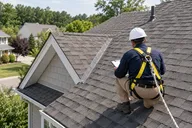 How does a roof insurance claim work after a storm?Insurance usually pays for sudden wind or hail damage, not wear. Wind/hail deductibles often run 1% to 5% of your home's insured value. How a claim works.
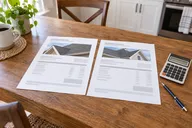 How do you compare roofing estimates?Compare roofing estimates line by line: squares, price per square, product lines, tear-off, decking, underlayment, flashing, permit, warranties and payment terms.
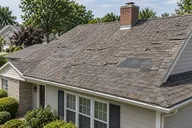 Should you repair or replace your roof?Most roof repairs cost $395 to $1,967; a replacement typically costs $5,900 to $13,400. How age, damage, layers and repair history decide which one you need.
 What to check before you hire a contractorFive things to ask for before you sign with a roofing, siding, window, bath or HVAC contractor, wherever you live in the United States.
 What questions should you ask a roofer before you sign?The roofing questions to ask before you sign: tear-off, decking, ice barrier, ventilation, permit, crew, cleanup, payment and warranty papers, plus red flags.